
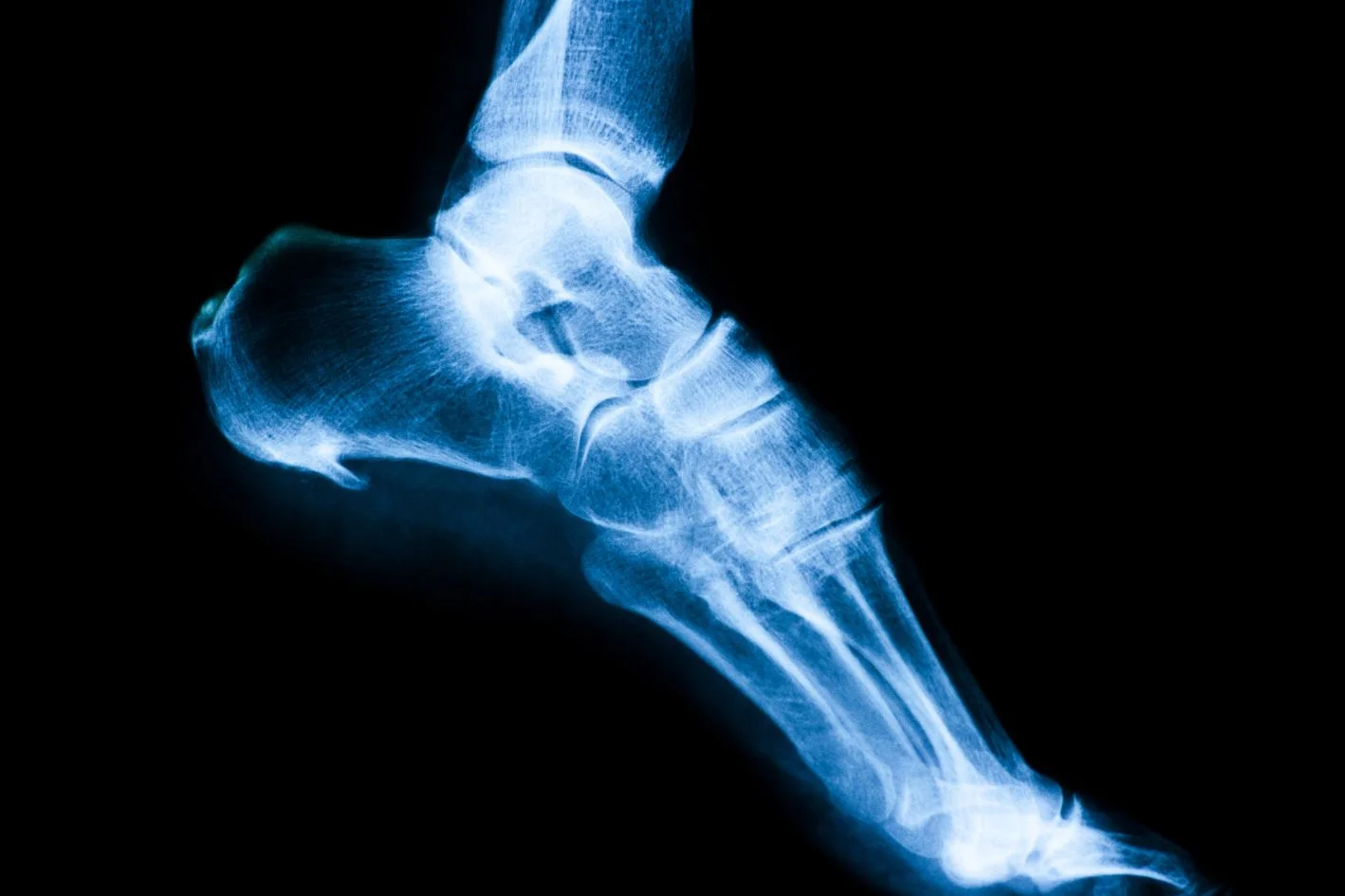
If you’ve had an X-ray for heel pain, there’s a good chance you’ve been told you have a “heel spur”.
For many people, that sounds alarming and drives anxiety.
It’s common for patients to start assuming:
“The spur must be causing the pain.”
“Do I need surgery to remove it?”
“Do I need surgery to remove it?”
In reality, and from what we have seen in our clinic, heel spurs and plantar fasciitis are often confused. But they’re not the same thing.
What is a heel spur?
A heel spur is a small bony projection that can form at the base or the back of the heel bone.
It develops gradually over time due to repetitive stress and traction on the heel bone, where the plantar fascia and Achilles tendon attach.
This phenomenon is our body’s natural response to stress.
Here’s the key point: Many people have heel spurs without any pain.
What is plantar fasciitis?
Plantar fasciitis is irritation of the plantar fascia, which is the band of tissue under your foot that supports the arch.
Symptoms often include:
- sharp pain with the first few steps in the morning
- discomfort after sitting
- pain after prolonged walking
- tenderness at the bottom of the heel
The pain comes from irritated soft tissue and often has little or nothing to do with bone growth
So what’s actually causing the pain?
In most cases, it’s the plantar fascia and not the heel spur.
Heel spurs are often:
- incidental findings
- long-standing changes
- present even when pain has settled
This is why someone can have:
- a large spur with no pain
- significant pain with no spur visible
The presence of a spur doesn’t automatically explain symptoms. It can, however, serve as a warning sign that your soft tissue is under tension, so you should start doing some stretches and exercises to lower your risk of developing plantar fasciitis.
Need Help? See A Podiatrist Today
Why this distinction matters
If you are not sure what is causing your heel pain, you won’t get the right treatment.
Believing the spur is the sole cause of pain can:
- increase anxiety unnecessarily
- delay appropriate treatment
- create fear around movement and cause over-resting
- lead to unwanted surgery
Plantar fasciitis, on the other hand, is usually managed conservatively and responds well when load is addressed appropriately.
Understanding the difference prevents unnecessary worry.
A pattern we often see
Patients often come in concerned after having an X-ray taken elsewhere.
They’ve been told they have a spur, and they’re worried about long-term damage. Some have been offered removal surgery, and they are depressed thinking about the downtime.
But the truth is, invasive options are rarely needed.
When we assess them, what often matters more is:
- how their foot loads during walking
- how much daily standing they do
- footwear choices
- sudden increases in activity
Especially in Singapore, where daily walking and commuting can quietly accumulate load, soft tissue irritation is often the bigger factor.
What you see isn't what you have
If you’ve been told you have a heel spur, it doesn’t automatically mean that bone growth is the main problem.
More often than not, the discomfort relates to soft-tissue stress, which can usually be managed without invasive measures.
If you need guidance on managing your heel discomfort, seeing a podiatrist can help you.
You May Also like

Tagged podiatry