
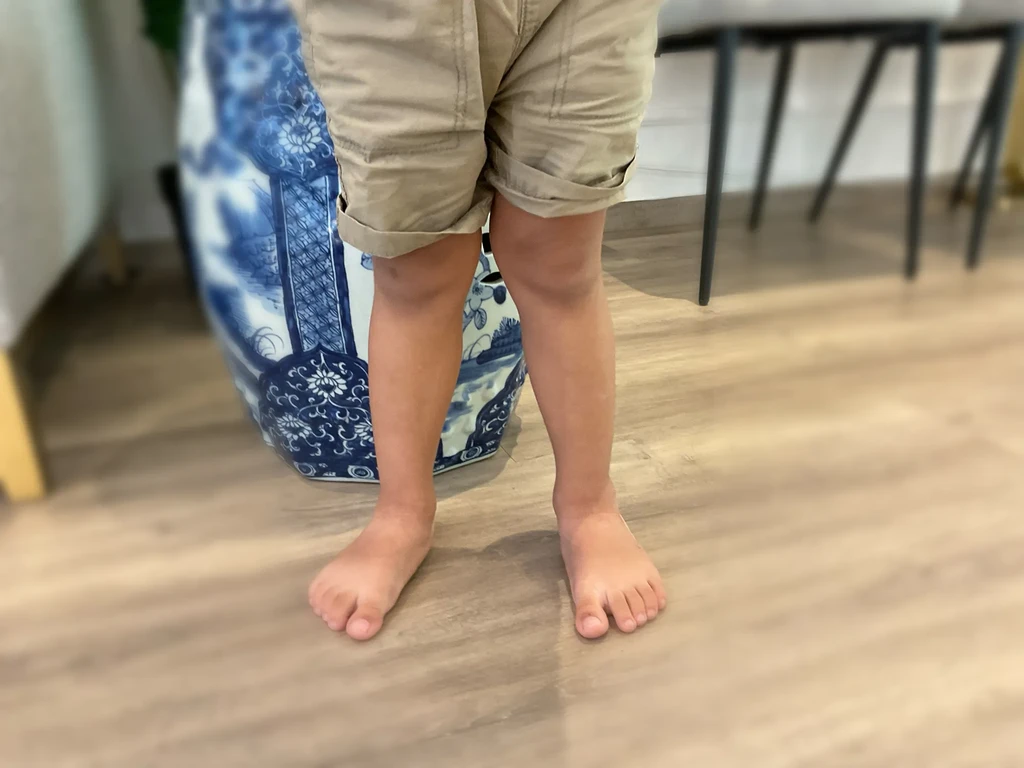
If your child’s knees touch but their ankles stay apart when they stand with their feet together, you are looking at knock knees (genu valgum). Parents often describe the legs as making an “X” shape. In most children this is a normal stage of growth. Knees start to angle inward from around age 2, look most pronounced around age 4, then slowly straighten out by age 7 or 8. By early adolescence, the legs usually settle into a near-straight alignment.
When the angle is mild, age-appropriate, and your child is moving comfortably, knock knees usually do not need treatment. When the angle is severe, only on one side, painful, or persists past the age range when most children straighten out, an assessment is worthwhile. A small number of cases point to an underlying condition that benefits from earlier intervention.
Symptoms of Knock Knees
Most children with knock knees have no symptoms at all and run, jump, and play without difficulty. When symptoms do appear, watch for:
- A visible inward angle of the knees, with a gap at the ankles when feet are together.
- Knee pain, especially on the inner side.
- Aching in the hips, thighs, or shins after activity.
- A clumsy or awkward running style.
- Difficulty sprinting, jumping, or changing direction quickly.
- A limp, especially if one leg is more affected than the other.
- Inner shoe wear and shoes that lean inward over time.
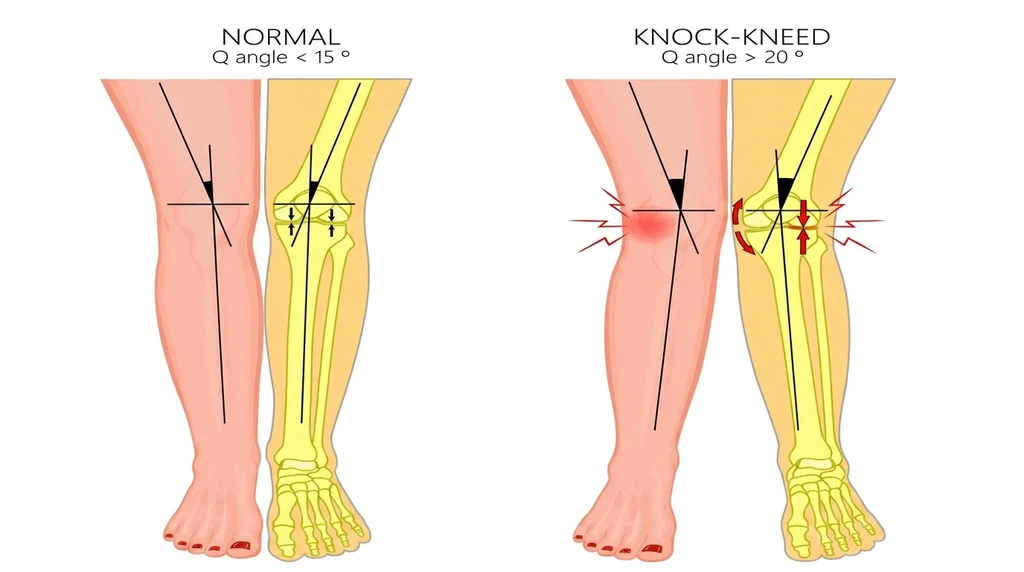
Types of Knock Knees
Physiological Knock Knees
The normal developmental pattern. Most children show some inward knee angle from around age 2, with the look most obvious around age 4, then straightening between ages 6 and 8. Both legs are usually affected symmetrically, and the child has no pain or functional issues.
Pathological Knock Knees
Less common, and the angle either appears outside the typical age range, is severe, or affects one leg more than the other. Often linked to an underlying condition.
Causes of Knock Knees
What Causes Knock Knees?
- Normal childhood development of leg alignment.
- Skeletal dysplasia or other bone development conditions.
- Vitamin D deficiency, including rickets.
- An old injury to the growth plate of the thigh or shin bone.
- Infection involving the bone or joint near the knee.
- Flat feet, which shift the knees inward through the ankle-knee chain.
- Excess body weight, which adds load through the knees.
- Joint hypermobility or generalised ligament laxity.
- A leg length difference.
- Muscular imbalance at the hip and thigh.
Who Carries a Higher Baseline Risk?
- Children with significant flat feet or hypermobility.
- Children outside the typical age range for physiological knock knees, particularly past age 7.
- Children with a history of growth plate injury, fracture, or bone infection.
- Children with vitamin D deficiency, rickets, or nutritional concerns.
- Children carrying excess body weight.
- Children with neuromuscular or skeletal conditions.
Conditions Commonly Mistaken for Knock Knees
A few patterns can look similar from across the room. A paediatric assessment separates these so the right area is addressed.
Bow legs (genu varum)
Bow legs sit on the opposite side of the alignment spectrum, with the knees apart and the ankles together, and are a normal stage in toddlers under 2. Knock knees are the reverse, with the knees together and the ankles apart, and tend to be most noticeable a little later in early childhood, so the two are told apart by the direction of the angle and the age at which they appear.
In-toe walking
In-toe walking can give the legs an “X-shaped” look from behind because the feet turn inward, even when the knees are aligned normally. The difference is that in-toeing is a rotational pattern of the feet and legs rather than a true knee alignment issue, which watching the child walk usually makes clear.
Leg length difference
A leg length difference can tilt the pelvis and make one knee appear to angle inward, mimicking knock knees on one side. The clue is that the appearance is one-sided and linked to the difference in limb length, whereas genuine knock knees are usually symmetrical across both legs.
Treating and Preventing Knock Knees
For most children with physiological knock knees, no treatment is needed. The alignment improves on its own with growth, and the right plan is monitoring with periodic review to confirm the angle is settling as expected.
Treatment is considered when knock knees are severe, painful, only on one side, persist past age 7 or 8, or are linked to an underlying condition. The plan is built around the cause. Where flat feet or excessive pronation are pulling the knees inward, custom orthotics realign the foot and reduce that pull. A strength and conditioning programme focused on the hip and thigh muscles can help the knee track better and reduce inner-knee load during sport. Footwear with a stable midsole supports the chain from the foot up. Where weight is a factor, gradual lifestyle changes reduce knee load. Underlying conditions such as vitamin D deficiency are managed alongside paediatric medical care. Surgical intervention is rare and reserved for severe cases that do not improve with non-surgical treatment, usually closer to skeletal maturity.
Prevention is largely about catching things early. Reviewing alignment if there is family history, addressing flat feet, and seeking assessment when knee or leg pain appears all help.
Have Your Knock Knees Managed at Straits Podiatry
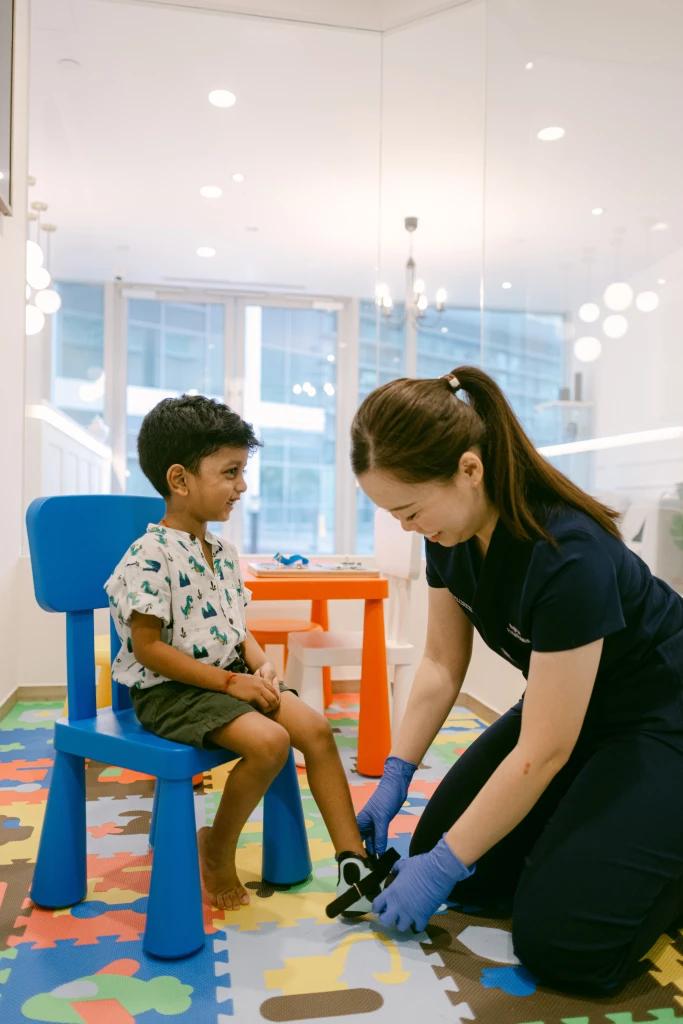
Paediatric foot, knee, and lower limb conditions are seen at all three Straits Podiatry clinics in Buona Vista, Orchard, and Paya Lebar, where our podiatrists work with children of all ages. Straits Podiatry is part of Healthway Medical Group.
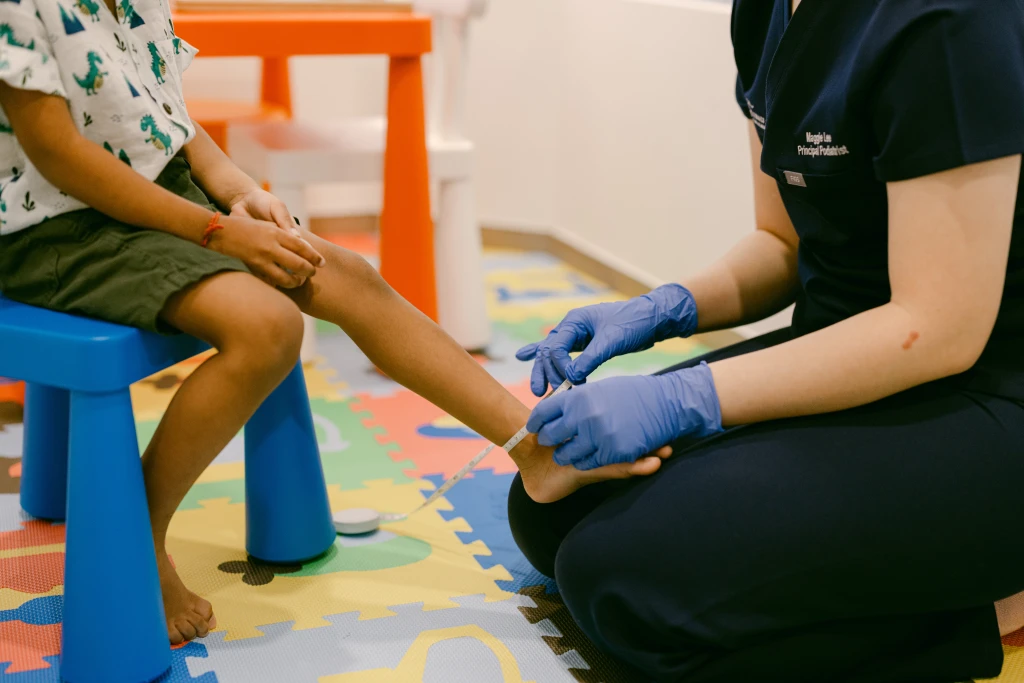
A paediatric knock knees assessment includes a paediatric assessment, gait analysis, lower limb alignment review, footwear review, and where indicated, custom orthotics, footwear advice, a strengthening programme, and a monitoring schedule as your child grows.
Speak with Straits Podiatry or book a consultation for an assessment and a tailored approach to manage your child’s knock knees.
Frequently Asked Questions About Knock Knees
Will my child grow out of knock knees?
Most children do. Knock knees are part of normal lower limb development. The inward angle is usually most visible around age 4 and gradually corrects by age 7 or 8. By early adolescence, the legs typically settle into a near-straight alignment. Not all cases resolve on their own, especially when the angle is severe, only on one side, or linked to an underlying condition. Outgrowing is the usual path but should not be assumed in every case, particularly if pain or asymmetry is present.
When should I worry about knock knees?
Book an assessment if the knee angle is severe, only affects one leg, getting worse rather than better, persists past age 7 or 8, or is causing knee, hip, or shin pain. Other red flags include a family history of bone development conditions, a child who is significantly underweight or overweight, or limping. Most knock knees are normal, but these features warrant a proper review to rule out an underlying cause that benefits from earlier intervention.
Does my child need braces or orthotics for knock knees?
Not always. Children with mild, painless, age-appropriate knock knees usually need monitoring rather than active treatment. Orthotics are considered when flat feet, hypermobility, or pain are part of the picture, because they reduce the inward pull on the knees from the ankle up. Bracing of the knee itself is rarely used in modern paediatric practice for typical knock knees. The decision depends on the cause, severity, and how the legs are tracking through growth.
Can knock knees affect sport?
For mild knock knees, usually not. Many children with a visible inward knee angle run, jump, and play sport at school without issue. When the angle is more severe, it can change how the knee tracks during sport, contribute to inner-knee pain, awkward running mechanics, or trouble with sprinting and direction changes. Addressing the underlying alignment with orthotics and a targeted strengthening programme often lets children stay active comfortably.
Will knock knees cause knee problems later in life?
For most children, no. Knees that straighten out by early adolescence rarely cause lasting issues. Persistent, significant knock knees into the teen years can contribute to inner-knee pain, kneecap tracking issues, or earlier wear on the inner side of the knee joint over time. Treating the contributing factors during the growing years, when alignment can still be influenced, reduces those longer-term risks and gives your child a more efficient running and walking pattern through life.