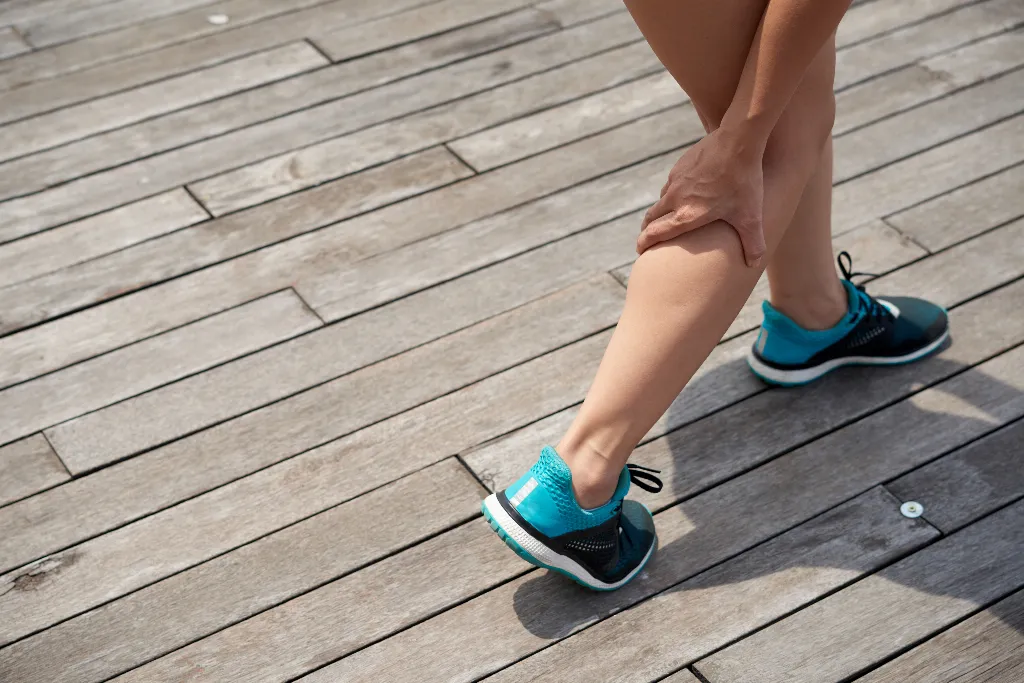
You push off hard to sprint or lunge for a shot, and a sharp pain grabs the back of your lower leg, as though something has been struck or has given way. Walking afterwards feels tight and tender, and pushing off the toes is what hurts most. This is a calf strain, an injury to the calf muscles that produces pain at the back of the leg, and it commonly affects people who play football or tennis or do sprints. It sits within the wider category of leg pain that includes shin splints, tendonitis, and vascular causes.
Like other muscle strains, such as hamstring strain, a calf strain requires proper management to minimise recurrence risk.
Causes of Calf Strain
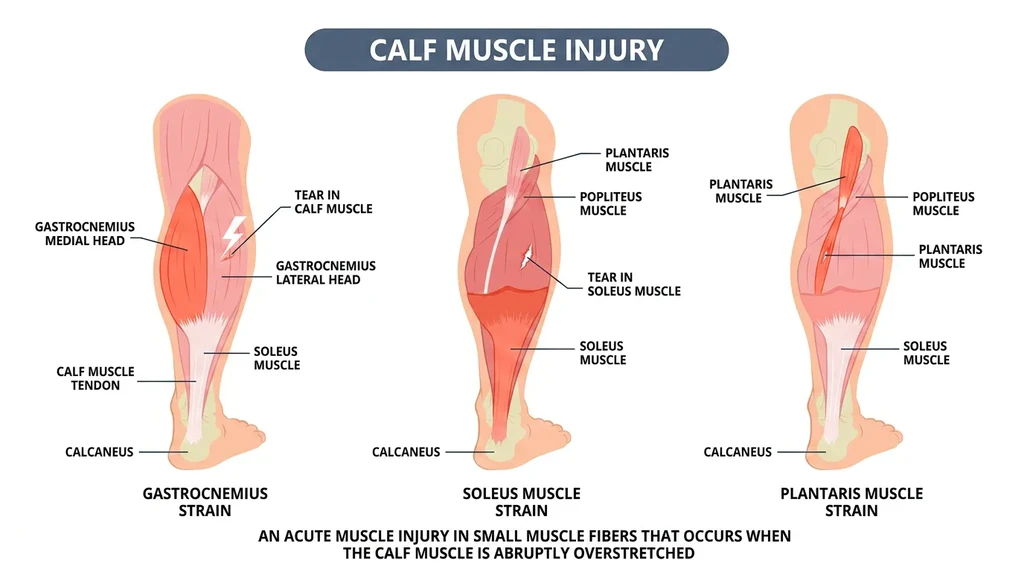
The calf muscle group are made up of 3 different muscles, namely gastrocnemius, soleus, and plantaris. The calf’s primary function is to plantarflex the ankle, or “push the ankle down”, and this is important in generating power for propulsion.
A calf strain occurs when the muscle is contracted and stretches beyond its limits, causing muscle fibres to tear. The most commonly affected muscle is the gastrocnemius.
Calf strain can be classified into 3 gradings:
- Grade 1, Mild, usually only cause pain during activity
- Grade 2, Moderate, significant pain and swelling even when walking
- Grade 3, Severe, significantly torn muscle or full rupture
Risk Factors of Calf Strain
Risk factors of calf strain include:
- Old age
- History of a calf injury
- History of Achilles tendon injury
- Tight calf muscles
- Sudden increase in training intensity
- Inadequate recovery
- High-impact sports enthusiasts or athletes
Signs and Symptoms of Calf Strain
Signs and symptoms of calf strain include:
- Posterior leg pain, unable to run or jump
- Pain may affect walking if moderate-to-severe
- Palpable tender spot in the calf
- Swelling
- Difficulty moving the ankle up and down
- Bruising or ecchymosis may be present
Treating and Preventing Calf Strain
Managing calf strain involves addressing the injured muscle fibres and rehabilitation. It is important to undergo proper rehabilitation to minimise the risk of recurrence.
Treatment options of calf strain in Singapore include:
- Rest
- Ice
- Progressive strengthening and rehabilitation
- Physical therapy
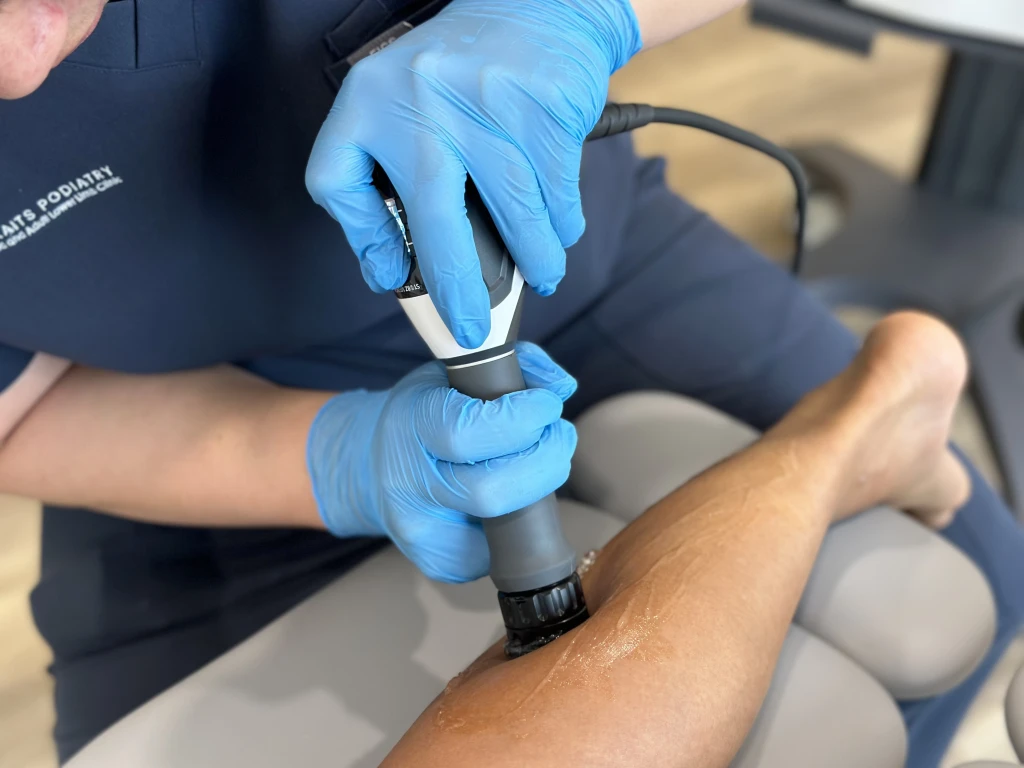
- Extracorporeal shockwave therapy for promoting the natural recovery of the injured muscle fibres
- Radial pressure wave therapy to improve muscle flexibility

Have Your Calf Strain Managed at Straits Podiatry
When a calf strain keeps you off the pitch, the road, or the court, returning to load too soon is the fastest way back to a fresh tear. At Straits Podiatry, the assessment looks at where the muscle is tender, the grade of the strain, your training load in the weeks leading up to the injury, your calf flexibility and ankle range, and your gait pattern, so the rehabilitation can match what your leg actually needs rather than a generic timeline.
From there, the plan is built around your sport and your daily routine. Services that may form part of your care include gait analysis, custom orthotic insoles, progressive loading rehabilitation with our physiotherapist, ESWT for cases where healing has stalled, and radial pressure wave therapy to restore muscle flexibility. Speak with the team or book a consultation for a thorough assessment and a tailored return-to-sport plan.
Frequently Asked Questions About Calf Strain
What causes a calf strain?
A calf strain happens when the calf muscle is contracted and stretched beyond its limit, tearing some of the muscle fibres. The common triggers are sudden acceleration or deceleration in sports like football, tennis, basketball, and sprinting, jumping movements that load the calf eccentrically, and changes of direction. Risk goes up with tight calves, prior calf or Achilles injury, a sudden spike in training intensity, inadequate recovery between sessions, and older age, since muscle elasticity reduces over time.
Can I keep running with a calf strain?
Running through a calf strain usually extends the recovery and raises the risk of converting a mild Grade 1 tear into a more serious Grade 2 or Grade 3 injury. The general rule is that pain during walking or running is a signal to stop, ice, and get the injury properly graded. A short rest window followed by a structured loading programme tends to return you to running far sooner than pushing through. If pain only appears at higher speeds or after long distances, an assessment will identify whether you can train at a reduced load while the muscle heals.
How long does a calf strain take to heal?
Healing time depends on the grade. Grade 1 strains (mild) often settle within one to three weeks. Grade 2 strains (moderate, with pain on walking and visible swelling) typically take three to six weeks to heal and a further few weeks to safely return to sport. Grade 3 strains (severe tears or full ruptures) can take two to four months and may require surgical assessment. In every case, full recovery is faster with a structured rehabilitation plan than with rest alone, since unloaded muscle weakens and re-tears once activity resumes.
What is the difference between a calf strain and Achilles tendonitis?
A calf strain is a tear within the muscle fibres of the gastrocnemius, soleus, or plantaris, and the pain sits in the muscle belly of the calf itself. Achilles tendonitis is inflammation or degeneration of the tendon that connects the calf muscles to the heel bone, and the pain sits lower, around the back of the heel or just above it. Calf strains usually come on suddenly during sport, while Achilles tendonitis tends to build gradually over weeks. The two conditions share some risk factors (tight calves, training spikes) and can coexist, which is why a clinical assessment matters before starting a rehabilitation programme.
How can I prevent a calf strain from happening again?
Recurrence rates after a calf strain are relatively high, particularly in the first few weeks once running and sport resume, because the healed tissue is not yet at the load tolerance it had before injury. The factors that reduce recurrence are progressive eccentric strength work for both the gastrocnemius (knee straight) and the soleus (knee bent), since the two muscles respond to different loading positions, regular calf flexibility work without overstretching the still-healing tissue, a graded return to running that builds volume before adding speed and hills, and addressing any foot mechanics or footwear factors that are loading the calf more than necessary. Where pronation, a stiff first toe joint, or a leg length difference is part of the picture, custom foot orthoses can reduce calf load during walking and running. Older runners and those returning to sport after a long lay-off generally benefit from a longer build phase. Stopping the strengthening work once the calf “feels normal” is one of the more common reasons strains recur.