
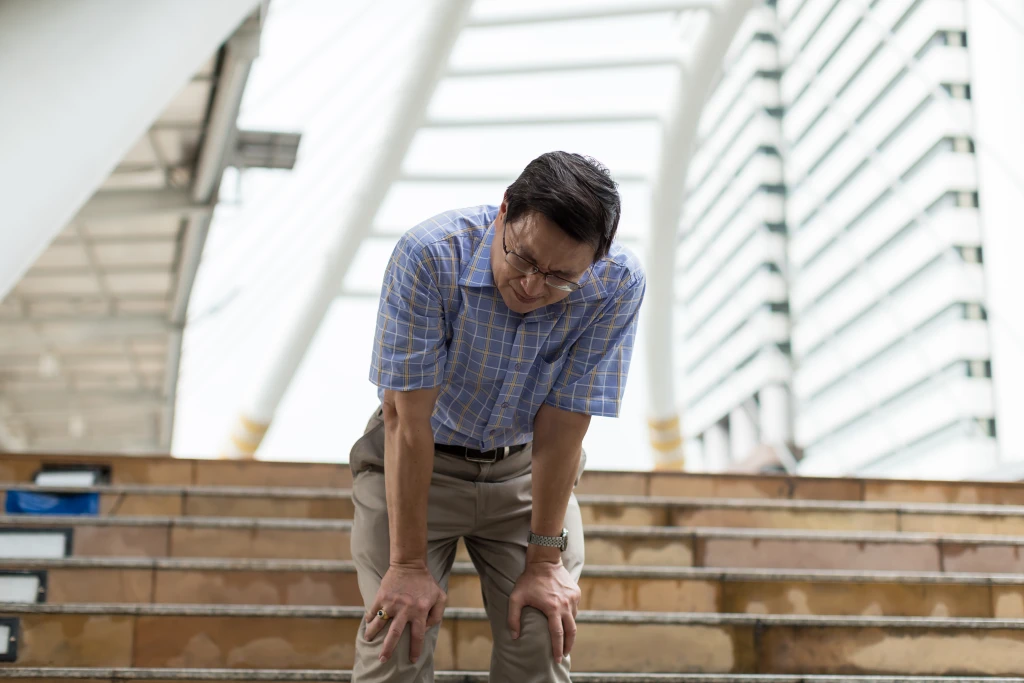
You bend your knees slightly to rise for a basketball shot, load up for a volleyball spike, or push off for a badminton smash, and a familiar pain catches at the front of the knee. At first it feels like a niggling soreness just below the kneecap that only shows up during training or after sport. When it starts returning more often, feels sharper with jumping, landing, squatting, or climbing stairs, and lingers longer than expected, it stops being easy to dismiss as a minor strain.
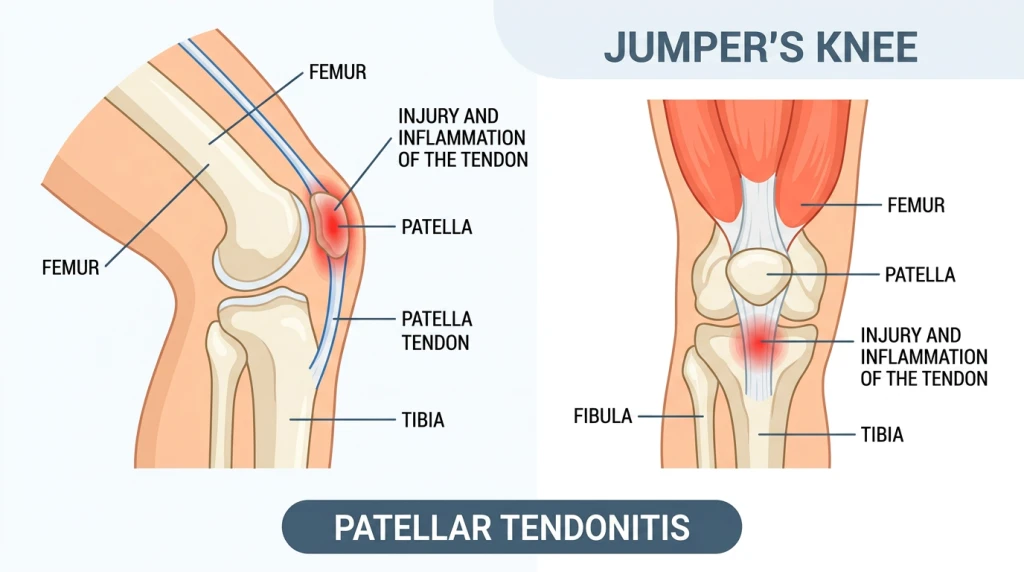
In many cases, this points to irritation of the patellar tendon, the structure just below the kneecap that connects it to the shinbone. The tendon helps the knee handle force every time you push off, land, or change direction. Repeated loading, especially when training volume rises faster than recovery, can aggravate the tendon. This condition is commonly known as patellar tendonitis or jumper’s knee, with related terms such as patellar tendinitis and patellar tendinopathy describing the same general problem.
Symptoms of Patellar Tendonitis
When the patellar tendon becomes irritated, the way the pain behaves with movement and activity is often the clearest signal:
- Anterior knee ache, a low, dull ache below the kneecap that becomes more pronounced as the tendon becomes more irritated.
- Pain under load, discomfort that appears at the start of exercise or after a harder session early on, then becomes more persistent over time.
- Pain with movement, more noticeable when bending or straightening the knee, especially during squatting, jumping, or stair climbing.
- Tenderness on touch, the area just below the kneecap feels sore even with light pressure.
- Stiffness after rest, the knee feels stiff after sitting or sleeping, easing with movement.
- Reduced function, pain that interferes not just with sport but with everyday movement.
Causes of Patellar Tendonitis
Once the symptoms become more noticeable, the next question is usually why the tendon has become irritated. The answer usually lies in repeated strain over time, especially when activity outpaces the body’s capacity to recover. The problem does not always start with one obvious change. It can build gradually when training load rises too quickly, recovery is inadequate, or tightness and muscle imbalance in the leg place more strain on the tendon.
What Causes Patellar Tendonitis?
- Repeated jumping, sprinting, or other forceful movements through the knee that gradually irritate the tendon.
- A sudden increase in training intensity, frequency, or load before the tendon has adapted.
- Inadequate recovery between sessions of intense or repeated activity.
- Tightness in the quadriceps or hamstrings that increases strain through the front of the knee.
- Muscle imbalances in the legs that alter how force is shared through the knee.
- Foot biomechanics that change how the knee absorbs load, such as significant flat feet or stiff high arches.
Who Carries a Higher Baseline Risk?
- People who play sports involving repeated jumping, sprinting, or sudden direction changes, such as basketball, volleyball, and badminton.
- People training at high intensity or high weekly volume.
- People with physically demanding jobs or hobbies that place repeated strain through the tendon.
- Males, who develop patellar tendonitis more commonly than females.
- People over the age of 40, where tendon problems become more common.
- People with certain medical conditions such as diabetes, kidney disease, and rheumatoid arthritis, which can affect tendon health.
Treating and Preventing Patellar Tendonitis
Treatment usually starts with reducing the strain that keeps aggravating the tendon and giving the area enough time to settle. In many cases, conservative care is enough to ease pain and restore function, especially when the problem is recognised early and activity is adjusted before the tendon becomes more persistently irritated.
The early focus is on activity modification: reducing or pausing the jumping, sprinting, squatting, or other repeated loading that keeps provoking the pain. Rest, ice, compression, and elevation after activity can settle the local irritation. Anti-inflammatory medication, where appropriate and advised, can help in the short term. A brace or strap may take some load off the tendon during the recovery window.
Building tendon capacity is what carries the longer-term result. Structured rehabilitation focused on the quadriceps and gluteal muscles, addressing flexibility in tight thigh muscles, and using progressive loading helps the tendon adapt rather than just settle. Where the tendon is chronically irritated, regenerative therapies can support tissue repair. Prevention rests on building training load gradually, allowing proper recovery, warming up and cooling down, attending to technique, and addressing the foot mechanics that influence how the knee is loaded.
Have Your Patellar Tendonitis Managed at Straits Podiatry
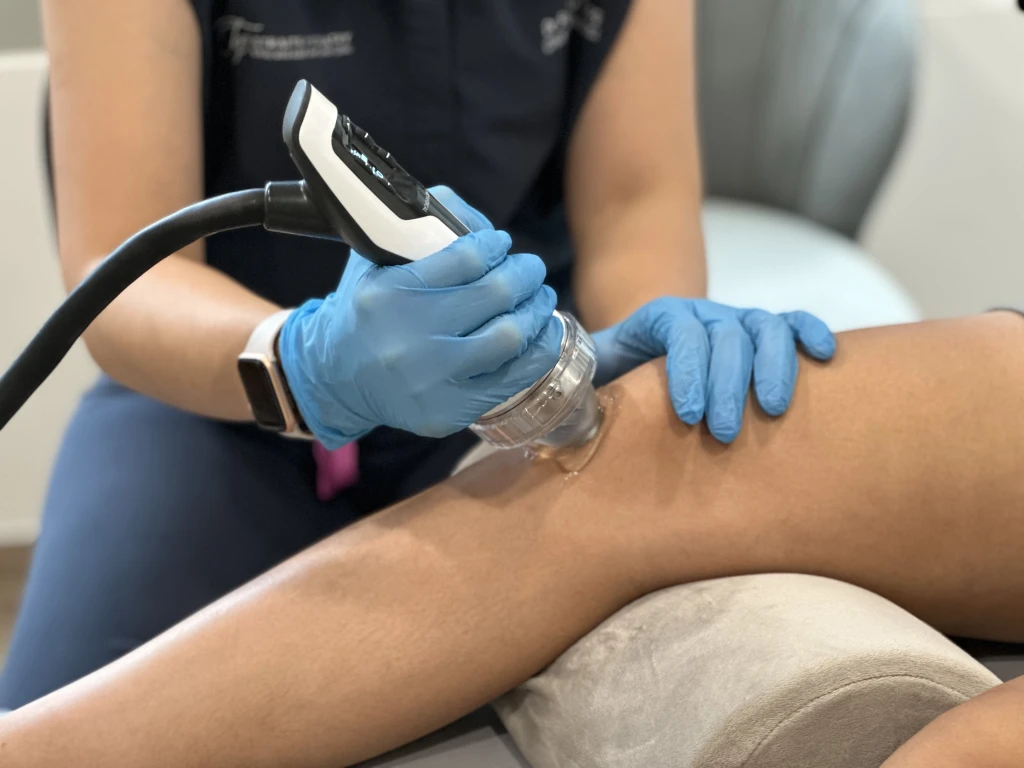
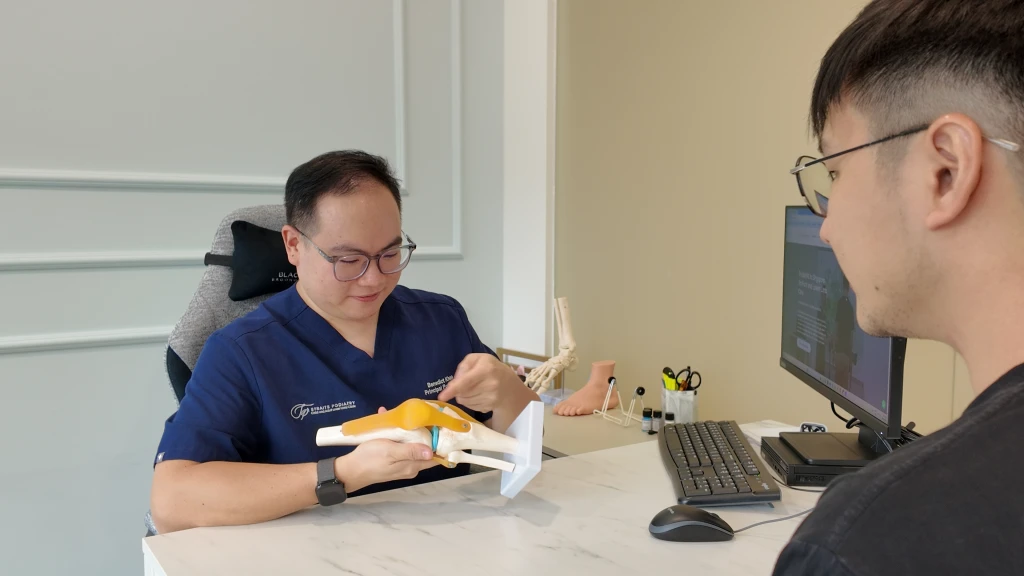
At Straits Podiatry, patellar tendonitis assessment includes a gait analysis and lower-limb biomechanical review to identify what is loading the tendon. Care may involve custom foot orthoses where foot mechanics are contributing, focused shockwave therapy to stimulate tendon repair in chronic cases, and radial pressure wave therapy to release tightness in the surrounding muscles. The Straits physiotherapy team supports the strength, loading, and return-to-sport side of recovery.
Speak with Straits Podiatry or book a consultation for an assessment and a tailored approach to manage your patellar tendonitis.
Frequently Asked Questions About Patellar Tendonitis
What is another name for patellar tendonitis?
Patellar tendonitis is also commonly known as jumper’s knee. The term comes from how this condition often develops in sports involving repeated jumping, landing, and forceful use of the knee. It is not limited to athletes, because any repeated strain through the patellar tendon can trigger the problem. You may also see the terms patellar tendinitis or patellar tendinopathy, which are often used to describe the same tendon issue, with tendinopathy reflecting the more chronic structural change in the tendon.
Can patellar tendonitis heal on its own?
Patellar tendonitis can improve on its own, although that usually depends on whether the tendon is given enough time and the right conditions to settle. If the knee keeps being loaded through the same aggravating activity, recovery slows and symptoms tend to linger. In many cases, the tendon gradually improves when load is reduced, pain is managed early, and the surrounding muscles are supported through stretching, strengthening, and a more measured return to activity.
Is walking bad for patellar tendonitis?
Walking is usually manageable for patellar tendonitis, especially at a comfortable pace on flat ground and when it does not provoke significant pain. Gentle walking is encouraged to keep the knee moving and reduce stiffness. It should not be forced if symptoms become more noticeable during or after activity. Longer distances, hills, and faster walking can place more strain on the tendon, so it is worth paying attention to how the knee responds and pulling back when needed.
Can my patellar tendonitis symptoms worsen over time?
Yes, patellar tendonitis symptoms can worsen when the tendon is continually overloaded without enough time to recover. Early on, the pain may only appear after sport or at the start of activity. If the same strain keeps building, it can become more persistent and show up before, during, and after movement. Once that happens, the condition often becomes harder to settle, and recovery can take longer because the tendon has been under repeated irritation for some time.
How can patellar tendonitis be prevented?
Patellar tendonitis is best prevented by managing how much strain goes through the knee over time. That usually means avoiding the habit of pushing through pain, building up training gradually, and allowing proper recovery between sessions. Warming up before exercise, cooling down afterwards, and working on strength and flexibility around the knee all help. Once symptoms start appearing, early adjustment is the most reliable way to stop the problem from progressing.