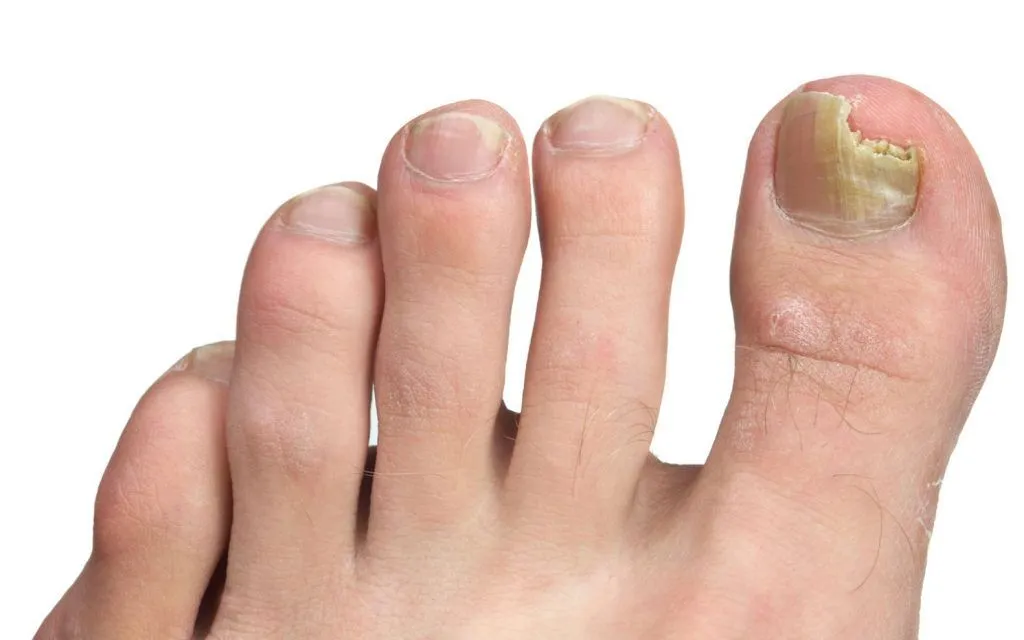
At first, a fungal toenail infection can look like a small surface change that feels easy to dismiss. A nail can begin to turn yellow, lose its smooth finish, or thicken slightly at the edge. Toenail fungus, medically referred to as onychomycosis or tinea unguium, often develops slowly, which is why early changes are commonly mistaken for wear from footwear or normal toenail ageing.
As the condition progresses, the structure itself can start to change. The toenail can become brittle, crumbly, or increasingly thick, sometimes lifting away from the nail bed. Over time, this can affect comfort in shoes and make toenail care more difficult. Because this condition often affects one or a couple of toenails rather than all at once, these changes often feel isolated rather than an obvious infection.
At the same time, not all thickened or damaged nails are caused by fungal infection. Some conditions, such as psoriasis affecting the toenails, can closely mimic fungal toenails, producing similar changes like subungual thickening, nail separation, or overall nail distortion. Because of this overlap, visual changes alone are not enough to be certain. Understanding when toenail fungus is present starts with recognising the symptoms that follow.
Symptoms of Toenail Fungus
The progression of toenail fungus is often gradual; this means early signs are easy to overlook. Changes usually begin in the nail itself rather than the surrounding skin, and they tend to progress slowly with everyday wear, trimming, and shoe pressure. As the infection settles within the nail, its appearance and structure start to shift in ways that become harder to ignore over time.
- Nail discolouration, where the toenail turns yellow, white, or brown and no longer appears clear or translucent.
- Thickening of the toenail, making it feel heavier, uneven, or more difficult to trim compared to surrounding nails.
- Distortion of nail shape, with the nail appearing warped, curved, or uneven as growth becomes irregular, sometimes resulting in ingrown toenails
- Brittle or crumbly texture, where the nail loses strength and begins to chip, split, or break more easily.
- Lifting of the nail from the nail bed, known as onycholysis, which can create a hollow space beneath the nail.
- An unpleasant odour might develop in some cases as debris builds up under the affected nail.

Common Causes of Toenail Fungus
Toenail fungus develops when fungi are given the right conditions to settle and persist around the toenails. Moisture, warmth, and disruption of the toenail or skin barrier all play a role. While exposure is common, infection is more likely when daily environments and individual factors allow fungal growth to continue over time.
What Increases Fungal Exposure and Spread?
- Existing fungal skin infections, such as athlete’s foot, which can spread from the skin to the toenails over time.
- Frequent exposure to warm, damp communal environments, such as swimming pools, locker rooms, and shared showers, where fungi are commonly present.
- Poor foot hygiene, including not washing or thoroughly drying the feet after they get wet, which allows moisture to persist.
- Prolonged moisture around the feet, including damp shoes or socks that remain wet for long periods, particularly during humid or rainy weather.
Who Carries Higher Baseline Risk?
- Individuals with weakened immune systems or chronic conditions, including diabetes or circulation issues, which reduce the body’s ability to clear infection.
- Older adults, as nails grow more slowly with age, giving fungi more time to establish within the toenail.
- People exposed to repeated toenail trauma, such as ongoing pressure from tight footwear or frequent stubbing, which weakens the nail barrier.
- Those with nail or skin conditions affecting the toenail unit, such as psoriasis, which disrupt normal nail structure.
Need Help? See A Podiatrist Today

Managing and Preventing Toenail Fungus
Once toenail fungus has been identified, the focus shifts to the control of its progression and reducing the chance of it spreading or returning. Because fungal changes sit within the toenail itself, improvement depends on how the toenail is cared for as it grows out. Podiatry care can play a role in guiding this process, with management and prevention working closely together.
Where fungal involvement is present, care is guided by how much of the toenail is affected and whether the nail has become thickened, distorted, or uncomfortable during daily wear:
- Topical antifungal treatments can be applied directly to the affected toenail and continued over time as it grows.
- Oral antifungal medication, which might be considered in more extensive cases and requires medical supervision to assess suitability.
- Toenail debridement, where thickened areas of the toenail are carefully reduced to help relieve discomfort.
- Photodynamic Antimicrobial Therapy (PACT), which uses a photosensitising gel and light to target fungal infection within the toenail.
- Partial or complete toenail removal, also known as nail avulsion, which might be considered in severe cases where the toenail is extensively affected.
Alongside management, preventive care focuses on reducing the conditions that allow fungal changes to return as the toenail continues to grow:
- Treating athlete’s foot early to prevent fungal spread to the toenails.
- Keeping your feet clean and thoroughly dry, especially after bathing, exercise, or long periods in shoes.
- Wearing well fitting, breathable footwear that reduces moisture build up around the toes.
- Avoiding the sharing of personal items such as towels, shoes, or nail tools that can spread fungal spores.
- Using antifungal sprays or powders in footwear to help limit fungal presence inside shoes.
With consistent toenail care and daily habits, the environment around the toenails becomes less favourable for fungal persistence. Over time, this supports healthier toenail growth and lowers the likelihood of recurrence.
Have Your Fungal Toenails Managed at Straits Podiatry
When a toenail becomes thicker, discoloured, brittle, or starts lifting from the nail bed, it’s natural to worry about what’s causing the change. At Straits Podiatry, we begin by confirming whether these changes are consistent with fungal infection, then assess how much of the toenail is involved, how deeply it has been affected, and whether surrounding skin or other toenails are showing related changes.
Once the assessment is clear, we’ll put together an approach that fits your routine. This can include guidance on toenail care, targeted management options such as topical treatments, debridement, or PACT where appropriate, with toenail removal considered in selected cases where other options aren’t suitable. Speak with our team or book a consultation for an assessment and a personalised plan to manage your toenail fungus.
Frequently Asked Questions About Fungal Toenails
Are fungal nail infections common in Singapore?
What are the symptoms of a fungal toenail?
Fungal toenail infection usually starts with changes in appearance. The toenail might become yellow, white, or brown, then gradually thicken and feel harder to trim. As it progresses, the toenail can turn brittle, crumbly, or distorted, and in some cases start lifting from the nail bed. In some cases, an unpleasant odour can also develop under the affected nail.
What is the main cause of toenail fungus?
Toenail fungus is caused by fungi that grow well in warm, damp environments. It is commonly picked up through contact with infected skin or surfaces in shared areas such as swimming pools and locker rooms. For ladies, frequent pedicure visits can increase their risk of catching a fungal nail infection. Factors like poor foot hygiene, prolonged moisture around the feet, and wearing tight or non-breathable footwear can also make it easier for fungal organisms to settle around the toenails.
How do I get rid of toenail fungus?
Treating toenail fungus often requires more than short-term use of over-the-counter (OTC) products, as nails grow slowly and management methods take time. Treatment options can include targeted podiatry care, such as toenail debridement or PACT. In selected cases where other approaches aren’t suitable, toenail removal might be considered. Early assessment helps guide the most appropriate approach. Delaying treatment often makes the fungus difficult to treat.
When is nail avulsion considered for toenail fungus?
Nail avulsion is considered when toenail fungus is extensive or persistent and other management options aren’t suitable. This is usually the case when the toenail has become significantly thickened, distorted, or detached, making it difficult to manage effectively. The procedure is performed under local anaesthesia, with aftercare focused on supporting healing as a new toenail grows back.
What happens when you leave toenail fungus untreated?
If left untreated, toenail fungus can continue to progress and might spread to nearby skin or other nails. The toenail can become increasingly thick, distorted, or uncomfortable, and will eventually lift away from the nail bed. Surrounding skin may also become irritated or cracked and can lead to secondary bacterial infection, which may make the condition more difficult to manage later.