
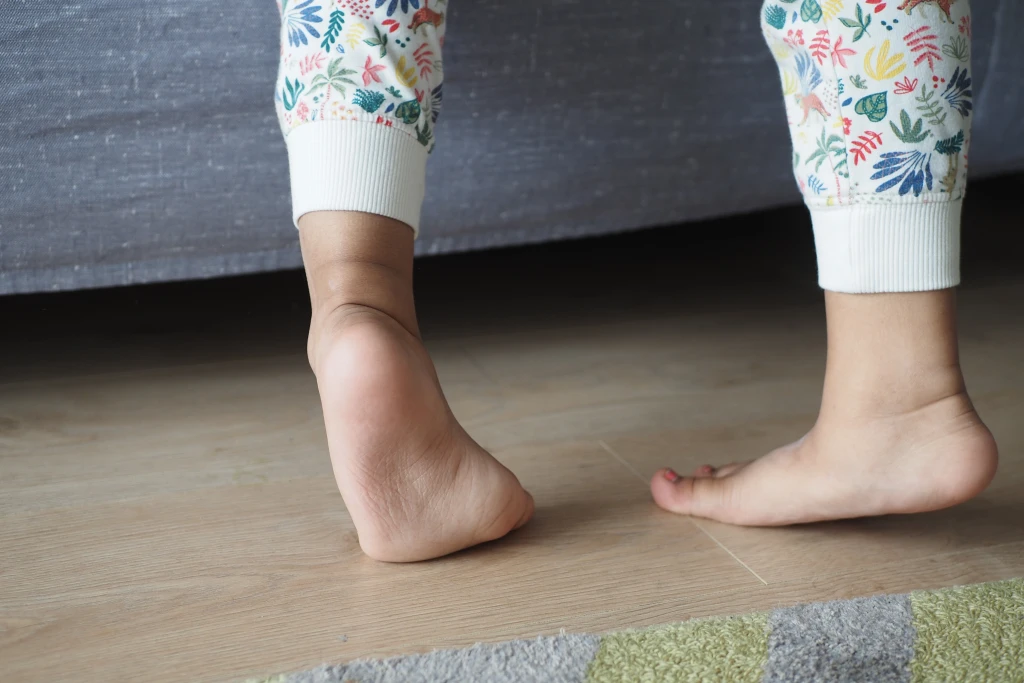
If your child’s toes point inward when they walk, you have probably watched them trip more than other children their age. Parents often call it “pigeon toes”. In medical terms it is in-toe walking, a gait pattern where the feet rotate inward instead of pointing straight ahead. It is one of the more common paediatric gait concerns in Singapore. Around 1 in 10 children between 2 and 5 walks this way, and the rate is even higher around age 4.
For many children, the inward turn settles on its own as the hips, legs, and feet finish rotating into their adult position. For others it lingers, leads to frequent falls, or points to a structural issue further up the leg. A paediatric podiatry assessment helps identify the cause, since the right plan depends on where in the leg the rotation is coming from.
Symptoms of In-toe Walking
- Toes that point inward when walking or running.
- Kneecaps facing each other rather than straight ahead.
- Frequent tripping, falling, or clumsiness on uneven ground.
- Repeated ankle twists or rolls.
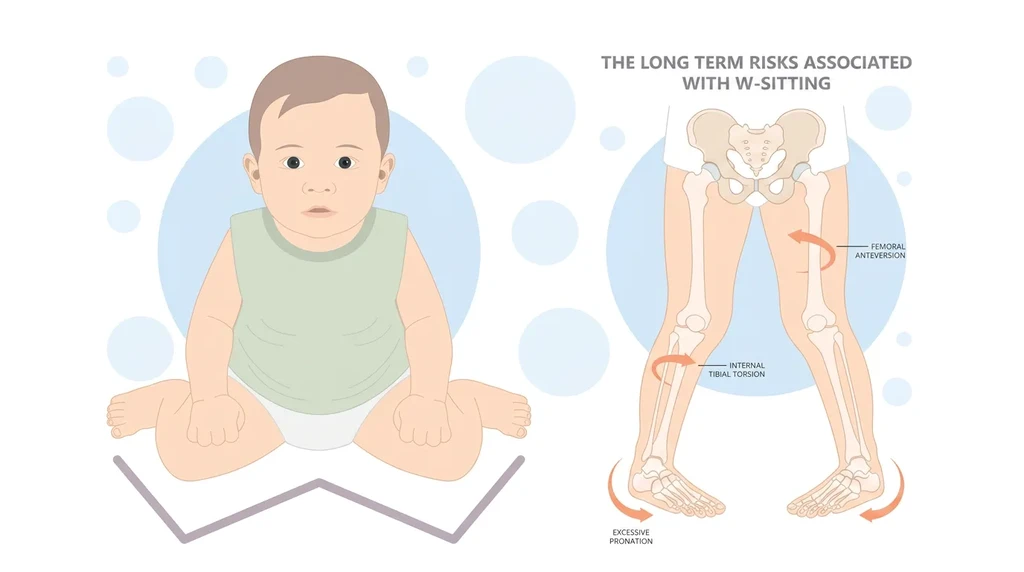
- A preference for sitting in the “W” position on the floor.
- Difficulty sitting cross-legged.
- An awkward or stiff-looking running style.
Types of In-toe Walking
In-toe walking can come from three different parts of the leg, and the source matters because it guides treatment.
Femoral Anteversion (Hip)
The thigh bone rotates inward, so the knees and feet point inward together. Most common between ages 3 and 6.
Internal Tibial Torsion (Shin)
The shin bone twists inward below the knee, so the feet turn in but the kneecaps face forward. Often seen in toddlers.
Metatarsus Adductus (Foot)
The front of the foot curves inward. Usually picked up in infancy.
Causes of In-toe Walking
What Causes In-toe Walking?
- Normal rotational development of the hips, shins, or feet that has not yet straightened.
- Metatarsus adductus, where the front of the foot is curved inward.
- Tight muscles or soft tissue along the inner leg.
- A difference in leg length.
- Habitual “W” sitting or kneel sitting, which encourages inward rotation.
- Underlying structural conditions such as hip dysplasia, clubfoot, or neuromuscular conditions including cerebral palsy.
Who Carries a Higher Baseline Risk?
- Children with a family history of in-toe walking.
- Children with hip dysplasia or other congenital hip conditions.
- Children with neuromuscular conditions.
- Children who consistently “W” sit during play.
- Children with a history of clubfoot or other congenital foot deformities.
Conditions Commonly Mistaken for In-toe Walking
Several other gait patterns can look similar at a glance, and a paediatric podiatry assessment helps differentiate them and rule out structural hip or leg conditions that may need onward referral.
General clumsiness
Frequent tripping and an awkward gait are sometimes read as in-toeing when the feet actually point straight ahead. Here the issue is coordination rather than rotation, so the feet and legs sit in a normal position and the pattern is one of balance and motor skill rather than an inward foot angle. Watching the child walk and run usually separates the two.
Toe walking
Toe walking is walking on the balls of the feet with the heels lifted, which changes how the gait looks but is a vertical pattern, not a rotational one. In-toe walking keeps the heels down and turns the feet inward instead. A child can occasionally show both, which is one reason a gait assessment is useful.
A limp from heel pain
A child guarding a sore heel can adopt an uneven or turned gait that is mistaken for in-toeing. The clue is that the altered walking pattern is driven by discomfort, often from heel pain, and eases as the pain settles, whereas true in-toeing is a painless rotational pattern rather than a response to soreness.
Treating and Preventing In-toe Walking
In-toe walking does not always need active treatment. Mild cases in young children often improve on their own as the leg bones rotate outward with growth. When in-toe walking is mild, painless, and not causing falls or functional issues, monitoring with periodic review is often appropriate.
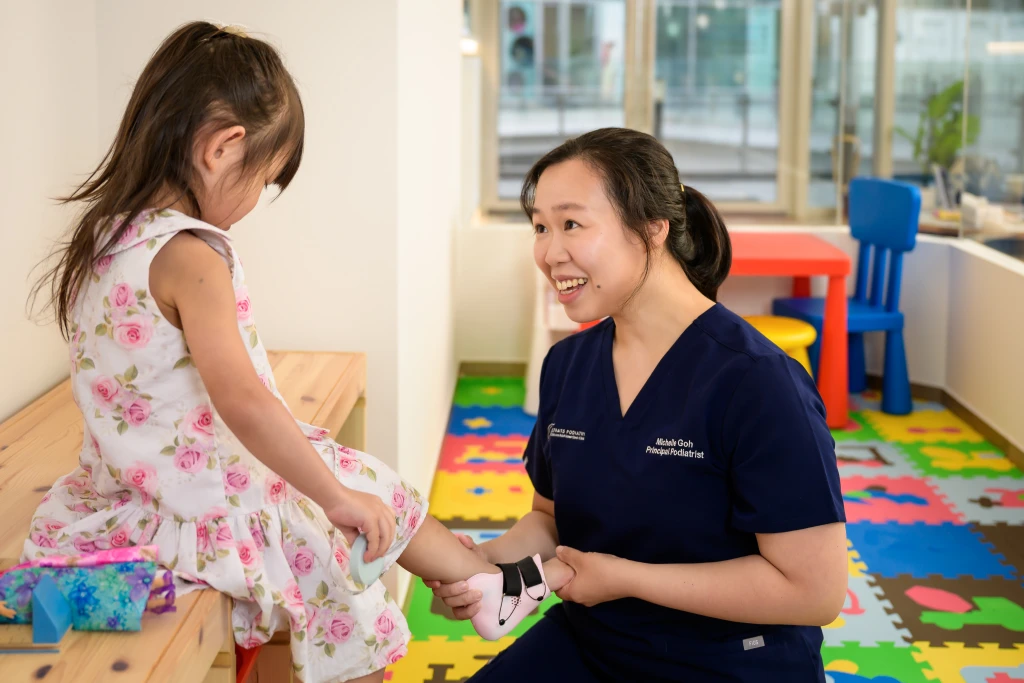
Treatment is considered when the pattern is causing frequent falls, knee or hip pain, ankle sprains, or is not improving with age. Lifestyle changes come first. Swapping “W” sitting for cross-legged, kneel, or side-sitting reduces inward pull on the hips. Targeted stretches loosen tight inner-leg muscles, and strengthening exercises support the outward rotators of the hip. Custom orthotics can guide foot alignment when the rotation is coming from the foot or compounding falls. Paediatric supramalleolar orthoses or ankle-foot orthoses add control when balance and stability are affected. Earlier intervention generally has a longer window to influence growth, so assessment before age 6 is often more useful than waiting.
Have Your In-toe Walking Managed at Straits Podiatry
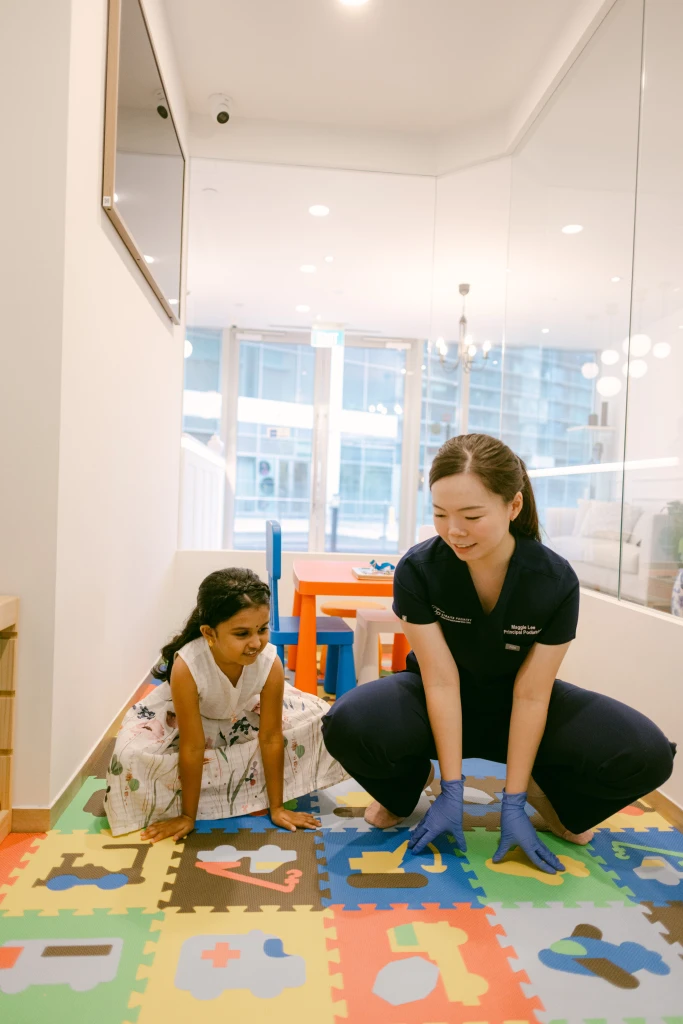
Paediatric foot and gait conditions are seen at all three Straits Podiatry clinics in Buona Vista, Orchard, and Paya Lebar, where our podiatrists work with children of all ages. Straits Podiatry is part of Healthway Medical Group.
A paediatric in-toe walking assessment includes a paediatric assessment, gait analysis, hip and lower limb rotation testing, footwear review, and where indicated, custom orthotics, paediatric supramalleolar orthoses, stretches, and a monitoring schedule as your child grows.
Speak with Straits Podiatry or book a consultation for an assessment and a tailored approach to manage your child’s in-toe walking.
Frequently Asked Questions About In-toe Walking
Will my child grow out of in-toe walking?
Many children do. The thigh, shin, and foot bones rotate outward with normal growth, so a lot of mild in-toeing settles on its own between ages 4 and 8. Some children do not outgrow it, especially when the rotation is moderate, when there is a structural cause higher up the leg, or when “W” sitting reinforces the pattern. Outgrowing is not guaranteed, and waiting it out is not the right plan if your child is already falling often or in pain.
When should I see a podiatrist about in-toe walking?
Book an assessment if your child trips or falls more than peers, twists their ankles often, complains of knee, hip, or leg pain, sits almost exclusively in “W” position, or if the in-toe walking is getting more pronounced rather than less. It is also worth seeking review if you noticed in-toeing in infancy that has not improved by age 3, since earlier assessment leaves more time to influence growth.
Does my child need braces or orthotics for in-toe walking?
Not always. Many cases respond to “W” sitting habit changes, stretches, strengthening, and supportive footwear alone. Orthotics or paediatric braces are considered when in-toeing is affecting balance, causing falls, or is severe enough that the child is struggling with sport, PE, or daily activities. A paediatric assessment guides the decision, so the device fits the cause rather than just the symptom.
Is “W” sitting really a problem?
It can be when it becomes the default. The “W” position locks the hips into inward rotation, takes the load off the core, and reinforces an in-toed walking pattern over time. Occasional “W” sitting is not harmful. Habitual “W” sitting in a child already walking with their toes in is worth changing. Encouraging cross-legged, side-sitting, or kneel-sitting at home and in childcare often makes a noticeable difference within months.
Will in-toe walking affect my child long-term?
Most children who in-toe walk grow up without lasting problems. Persistent in-toeing into later childhood can occasionally contribute to knee pain, awkward running mechanics, or repeated ankle sprains in sport, particularly when combined with hypermobility or muscle weakness. Addressing it early reduces those risks and gives your child a more efficient running pattern for PE, CCAs, and family activities, even if some inward turn remains into the teen years.