
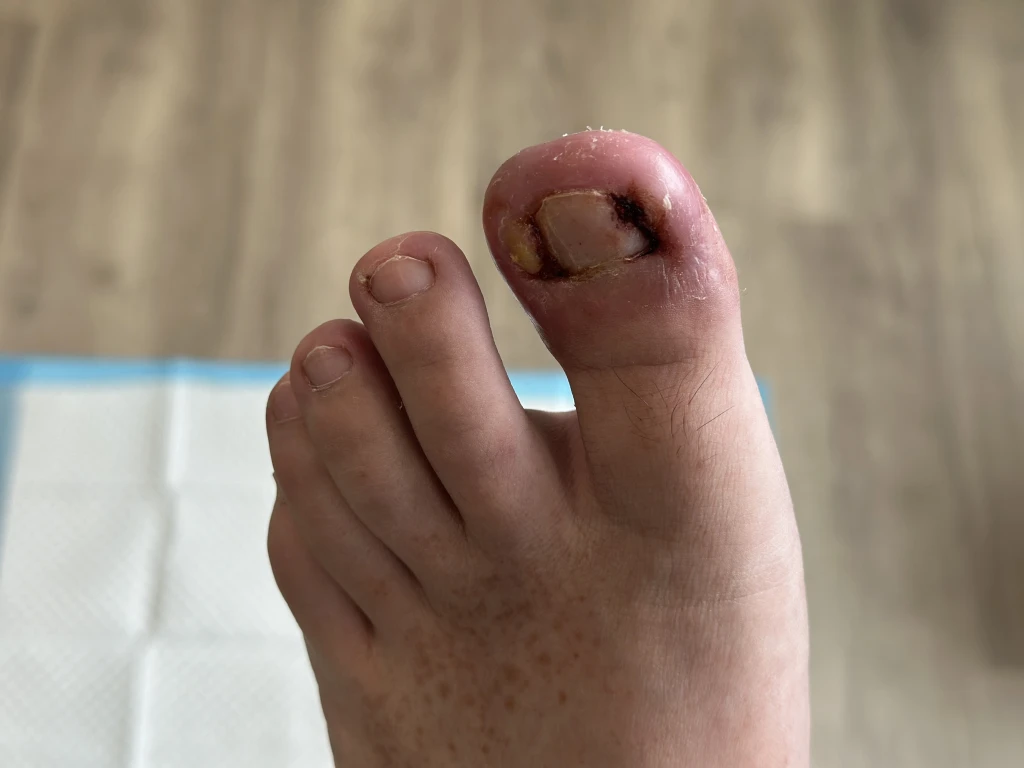
An ingrown toenail often starts with a sharp pinch at the toenail’s corner whenever you put weight on the toe. As the day goes on, that area becomes tender, and routine tasks such as the wearing of covered shoes or walking on firm ground start to feel uncomfortable. Over time, the skin surrounding the toenail becomes swollen and sore, and even the slightest touch can feel unexpectedly painful.
As this soreness increases, many would attempt what’s commonly known as “bathroom surgery”. This usually involves using a nail clipper to trim the toenail’s corner or lift it slightly in the hope of easing the pressure. This idea sounds feasible because the pain seems to stem from one exact point. However, this introduces bacteria into already irritated skin, and this can lead to paronychia with more swelling, redness, and discharge. Because these changes show how quickly a simple irritation can become an infection, recognising them early helps you avoid unnecessary pain and know when proper care is needed. With that context, the next section explains the key symptoms of an ingrown toenail and how they typically develop.
Symptoms of Ingrown Toenails
Once the toenail’s edge begins pressing into the surrounding skin, the changes tend to follow a sequence that’s easy to spot. The following symptoms will help you gauge whether the problem is still mild or already moving toward infection:
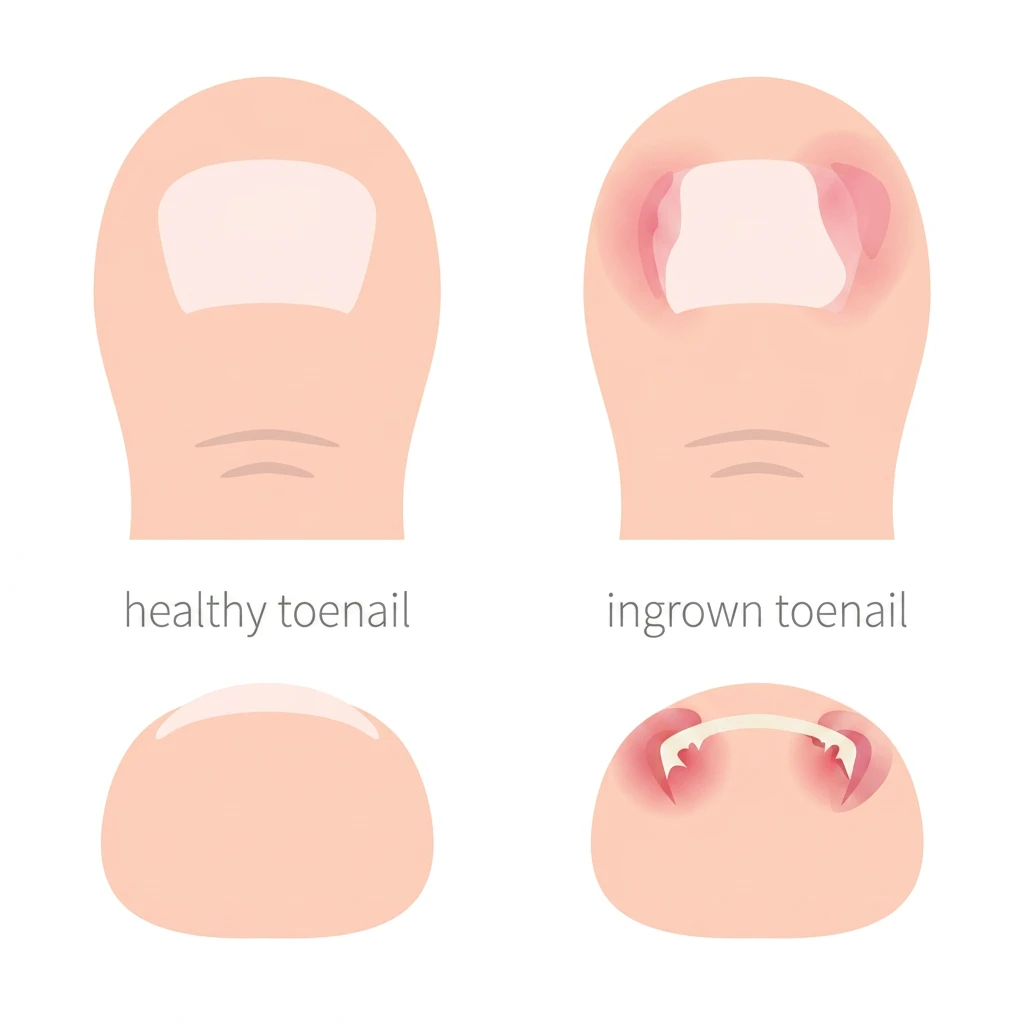
- Curving of the Toenail’s Edge: The corner of the toenail bends inward and starts pushing into the skin at the side of the toe.
- Local Tenderness and Swelling: The skin around the toenail becomes sore, puffy, and increasingly sensitive to touch.
- Redness, Warmth, and Discharge: As irritation progresses, the area might turn red, feel warm, and in some cases release pus.
- Pain with Enclosed Footwear: Covered shoes create pressure over the affected corner, leading to sharper or throbbing discomfort when walking.
- Bleeding along the Toenail’s Border: Because the irritated skin is now tender and fragile, it might split and cause light bleeding around the toenail.
- Pyogenic Granuloma: In more advanced cases, fragile overgrown tissue can form at the toenail’s fold, often appearing as a small red bump that bleeds easily.
Causes of Ingrown Toenails
Ingrown toenails occur when the edge presses into the surrounding skin and causes irritation. This usually develops when the toenail’s growth path changes due to trimming habits, pressure from footwear, or shifts in the nail bed over time. Once the skin becomes irritated, it stays sensitive and the issue can return easily.
What Contributes to Irritation and Inward Growth?
- Cutting toenails with rounded corners encourages the edge to grow inward and press into the surrounding skin.
- Tight or narrow shoes squeeze the toes and push the edges against the surrounding skin.
- Stubbing the toe or having it stepped on can change how the toenail grows and increase the chance of it becoming ingrown.
- Peeling or picking at the toenails damages the nail bed and surrounding skin, making abnormal growth more likely.
- Over trimming or reshaping during pedicures can disrupt the toenail’s natural growth pattern and lead to recurrent issues.
- Sweaty feet or prolonged moisture soften the skin around the nail fold, making it easier for the edge to press into it.
- Fungal nail infections can cause a build-up of dead skin under the nail, causing the nail to thicken and grow inwards.
Who Carries Higher Baseline Risk?
- People with naturally curved or genetically predisposed toenails, as certain shapes make the nail margin sit closer to the skin fold.
- Adolescents and young adults, since increased perspiration softens the skin and makes inward growth more likely.
- Athletes and physically active individuals, where repetitive pressure or micro toenail trauma increases susceptibility.
- Individuals with diabetes or poor circulation, because the skin becomes more reactive and slower to heal, increasing the risk of complications.
Conditions Commonly Mistaken for Ingrown Toenails
A painful, tender toenail corner can also come from a few other conditions that look similar at first glance. Recognising which is which guides the right treatment.
Paronychia
Paronychia is an infection of the skin fold around the nail, presenting with redness, swelling, warmth, and sometimes pus. It frequently coexists with an ingrown toenail because the nail edge piercing the skin creates an entry point for bacteria. The distinction matters: paronychia needs infection management, while the underlying ingrown nail still needs structural correction once the infection settles.
Subungual hematoma
A subungual hematoma is a collection of blood under the nail, usually following a stub, crush, or sustained downward pressure (tight shoes during long activity). The pressure pain can mimic an ingrown corner, but the discolouration sits beneath the nail plate rather than at the nail fold, and there is usually a clear trauma history.
Fungal nail infection
A fungal nail infection thickens and distorts the nail plate, and the thickened nail can press into the surrounding skin in a pattern that mimics an ingrown corner. The colour and texture changes typical of fungal involvement (yellow, white, brittle, crumbly) point to the underlying cause, and treating the fungus reduces the inward pressure.
Pyogenic granuloma
A pyogenic granuloma is a small, fragile, red overgrowth of tissue that bleeds easily and often forms at the nail fold in advanced ingrown cases. It can also occur in isolation after minor trauma. When present alongside an ingrown toenail, the granuloma usually settles after the nail spike is removed. Isolated granulomas may need separate management.
Subungual exostosis
A subungual exostosis is a benign bony outgrowth from the tip of the toe bone that pushes upward against the nail. The resulting pressure on the nail can mimic an ingrown corner, particularly in younger patients. An X-ray confirms the bony cause, which needs a different approach to a true ingrown toenail.
Treating and Preventing Ingrown Toenails
Ingrown toenails tend to worsen when pressure, moisture, and irritation continue around the nail fold, which is why early treatment helps reduce pain and lowers the chance of recurrence. How the toenail grows, how often the toe is stressed, and whether any infection is present all shape the approach, and certain cases settle quickly while others require more structured care.
Conservative treatment
The aim of conservative treatment is to calm the area, ease discomfort, reduce direct pressure through the painful corner, and guide the nail back to a straighter growth pattern.
-
Antiseptic foot soaks and wound care. Antiseptic foot soaks settle local irritation and reduce the chance of infection at the nail fold. When the skin around the nail is broken, red, or discharging, wound care with appropriate dressing reduces moisture exposure and protects the area while it heals.
-
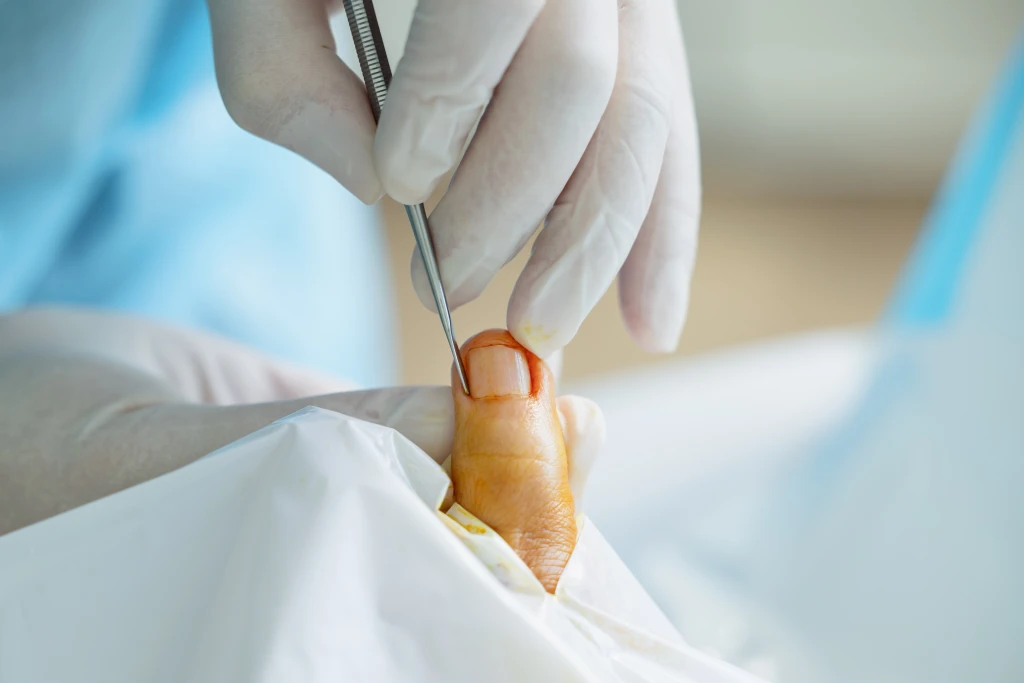
Nail spike trimming. When the nail edge is actively pressing into the skin, in-clinic nail spike trimming eases the immediate pain by removing the offending portion of the nail spike. This is a non-invasive trim that does not remove the wider nail. It targets only the spike that is irritating the skin.
-
Nail bracing. Nail bracing applies a gentle, sustained corrective force across the nail plate to guide the toenail into a straighter growth pattern over time. It suits patients who prefer a non-surgical option, or whose nail shape contributes to recurrent ingrowth.
-
Custom foot orthotics. For patients whose foot mechanics create repeated pressure through the big toe (high arches, hypermobile first ray, or repetitive impact sports), custom foot orthotics redistribute load away from the affected toe and reduce the recurring stress that re-aggravates the nail fold.
-
Antibiotics when infection is confirmed. If the surrounding skin shows signs of bacterial infection (warmth, spreading redness, pus, fever), antibiotics prescribed by a doctor prevent further spread and resolve the infective component before structural correction of the nail proceeds.
-
Footwear and trimming habits. Long-term prevention rests on daily habits: avoid tight footwear that pushes the edge into the skin, trim toenails straight across instead of curving the corners downward, and file any sharp edges so they don’t catch on or scratch the skin as the toenail grows out.
When conservative care isn’t enough
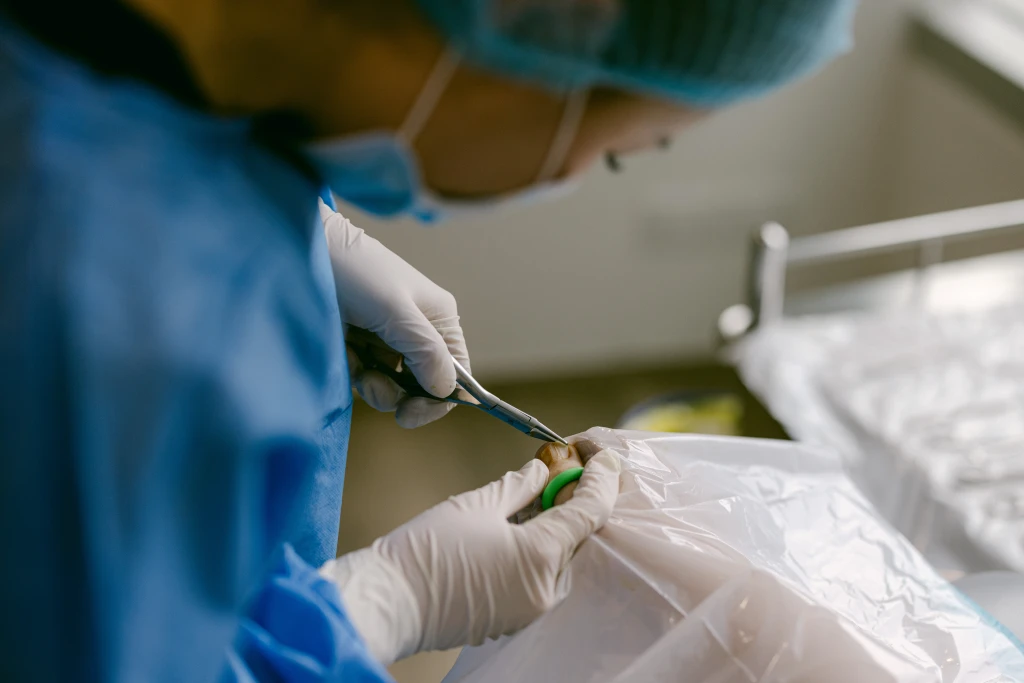
When episodes keep recurring or the skin stays sensitive despite consistent conservative care, a partial nail avulsion procedure is usually the next step. It removes the portion of nail that keeps pressing into the skin, with the option of chemical matrixectomy to prevent that section from regrowing. This addresses the structural cause directly when conservative measures cannot resolve the recurring irritation.
Have Your Ingrown Toenail Assessed at Straits Podiatry
When an ingrown toenail keeps flaring up or starts affecting everyday comfort, it helps to have it examined early. At Straits Podiatry, we begin by assessing the toenail’s shape, the depth of irritation, and whether any infection is present, while also checking how your footwear, activity levels, and foot mechanics are influencing the problem.
Once the assessment is clear, we’ll recommend a plan suited to how the toenail is growing and how sensitive the skin has become. This can include conservative care, nail bracing, or a partial nail avulsion procedure when needed, along with guidance on trimming habits and footwear choices to reduce recurrence. Speak with our team or book a consultation for an assessment and a personalised approach to resolve your ingrown toenail pain.
Frequently Asked Questions About Ingrown Toenails
How is an ingrown toenail diagnosed?
A podiatrist diagnoses an ingrown toenail through a physical examination of the toenail’s edge and surrounding skin, looking for redness, swelling, tenderness, or discharge. They’ll also ask about recent trimming habits, footwear, trauma, or recurring episodes to understand what triggered the problem. This assessment clarifies severity and guides the most suitable management approach.
What are the symptoms of an infected ingrown toenail?
An infected ingrown toenail often presents with increasing pain, swelling, redness, warmth, and sometimes pus around the nail fold. The skin might look puffy or overgrown, and pressure from shoes becomes more uncomfortable. These changes signal that the irritation has progressed into infection, and seeing a podiatrist early helps prevent the condition from worsening.
What is a nail avulsion procedure?
A nail avulsion procedure removes the part of the toenail that keeps growing into the skin, easing pain and allowing the area to heal. It’s done under local anaesthesia and is usually recommended for severe or recurring cases. Only the problematic section is removed in most situations, and recovery focuses on keeping the toe clean and protected while the skin settles.
Is it okay to dig out an ingrown toenail myself?
Digging out an ingrown toenail on your own is not advisable because it can introduce bacteria, worsen the pain, and injure the skin or nail bed. These attempts often push the toenail deeper and lead to infection. Professional care by a podiatrist is safer and avoids complications that prolong recovery.
What should I take note of after a nail avulsion procedure?
We do not recommend cutting the affected nail yourself. By doing so, it can lead to further complications, such as infection or leaving a deeper nail spike behind. If you are experiencing symptoms of an ingrown toenail, it is important to seek medical attention from a qualified professional. They can provide a proper diagnosis and recommend the best course of management for your individual needs.