
What Is PACT Antifungal Therapy?
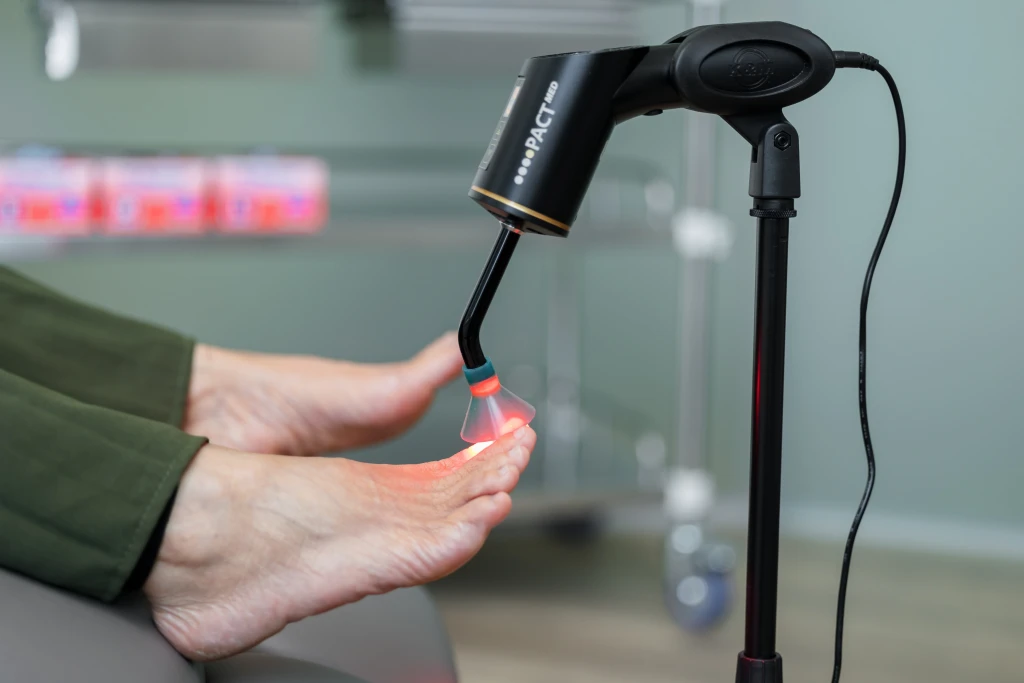
PACT stands for Photodynamic Antimicrobial Therapy, and it is a painless, light-based option for managing a stubborn fungal nail infection. It is often mistaken for laser, but it works on a completely different principle. There is no heat, no needle, and no tablet to swallow. The nail is prepared, a coloured gel is applied, and a specific wavelength of light does the work locally at the nail.
PACT suits people who want to avoid oral antifungal tablets, who cannot take them because of their liver profile or other medications, or who simply want a route with no downtime. It is used across a wide range of ages and medical backgrounds because nothing is absorbed into the bloodstream. In Singapore’s warm, humid climate, where feet spend long days in closed shoes and socks, fungal nails are one of the more persistent problems people bring to the clinic, and a well-tolerated option that can be repeated matters.
One honest point up front, because it shapes everything below: phototherapy on its own is rarely enough to clear a fungal nail. The fungus does not only sit on the surface. It lives inside a thickened nail plate and in the skin and footwear around it. PACT is most useful as one part of a combined plan, which is how it is used here.
How Does PACT Work?
PACT uses two components that only do their job together: a photosensitiser and light.
The photosensitiser is a gel, usually dyed blue, that is applied to the nail and the surrounding skin. It is designed to bind to fungal cells and settle onto them during a short soaking period. On its own, the gel does nothing harmful. It simply makes the fungal cells sensitive to a particular colour of light.
The light is then shone over the treated nail at a specific wavelength. When that light meets the photosensitiser sitting on the fungal cells, it triggers a reaction that generates reactive oxygen molecules right at the surface of those cells. Those oxygen molecules damage the fungal cell wall and the structures inside, so the fungus in the treated zone is knocked back. Because the reaction happens only where the gel and the light overlap, healthy tissue is largely left alone, which is a large part of why the process is comfortable and free of downtime.
The limitation sits in that same mechanism. The light and gel act on the fungus they can reach at each session. Fungus buried deep in a thick nail plate, or hiding in the skin and shoes, is not touched by a single pass of light. This is exactly why nail reduction beforehand and a topical antifungal between sessions matter so much, and why a fungal nail is treated as a plan over time rather than a one-off zap.
How Is PACT Performed?
A PACT session is straightforward and there is nothing to recover from afterwards.
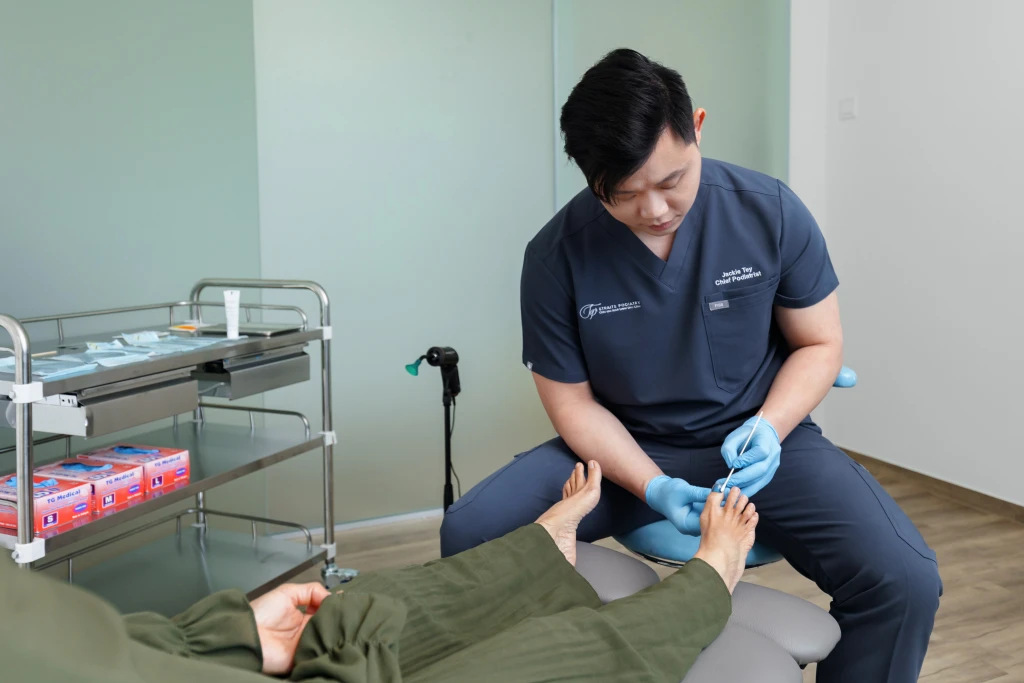
- Nail preparation. The affected nail is trimmed and the thickened, crumbly surface is filed down. Reducing the nail plate first is not cosmetic. A thinner nail lets the gel and the light reach the fungus underneath, so this step makes the actual therapy more effective.
- Applying the photosensitiser. The blue gel is applied to the nail and the skin around it and left to soak in for a set period so it can settle onto the fungal cells.
- Light exposure. The nail is exposed to the specific wavelength of light for the required time. This is the step that generates the oxygen molecules at the fungal cells. You feel nothing beyond the light resting on the toe, and most people read or use their phone through it.
- Finishing up. The gel is cleaned off and there is no dressing or downtime. You put your shoe back on and walk out as normal. Where a topical antifungal is part of the plan, guidance is given on applying it at home between sessions.
The whole process is painless, with no needles and no heat sensation. Because nails grow slowly, the visible result of clearing an infection will take time. Positive results are only seen when new, clearer nails grow in from the base over the following months, not overnight. Anyone who tells you that your nail is improving at every visit is only trying to keep you happy.
How Many PACT Sessions Will I Need?
A standard course of treatment is 3 to 6 sessions, with 6 sessions being the norm. It also depends on how thick the nail is, how many nails are involved, and how long the infection has been present. As a general shape, sessions are commonly spaced 3 to 7 days apart, with a month’s break every 3 sessions, then reviewed. A mild infection on one nail may settle in a single course, while a thicker, long-standing infection across several nails usually needs slightly more.
Two things are worth holding on to. First, PACT acts on the fungus exposed at each session, so the treated nail growing out and being trimmed back over time is part of how the infection is cleared. Second, because nails grow slowly, patience is part of the plan, and clear nail appears gradually. The progress is reviewed after each course, and the exact plan may be adjusted to how your nail is actually responding rather than fixed in advance.
Lastly, it is important to understand that if the treatment is simply not working after a repeated course, continuing to repeat it with no end in sight is unlikely to change the outcome.
PACT Compared with Oral Tablets and Nail Avulsion
Most people weighing up a fungal nail option are really choosing between three routes, so it helps to see them side by side.
Oral antifungal tablets work from the inside, reaching the nail through the bloodstream. They can be effective, but they involve daily dosing over weeks or months and can interact with other medications. You will usually need liver-function monitoring while taking them, as the medication adds a burden to the liver. That makes them less suitable for some people, and unusable for others, particularly those with underlying health issues.
Nail avulsion is a slightly more invasive method that works by removing all the infected nail in one go. While it can appear as a one-time definitive removal of the infection, there are risks associated with it. Bleeding, secondary bacterial infection, and pain are the common post-procedure concerns, and it often requires 2 to 4 weeks of downtime before returning to normal activities.
PACT pairs a topical gel with a specific wavelength of light and works locally at the nail with no heat and no systemic exposure. There is no tablet to absorb, no burden to systemic health, and no downtime. Its trade-off is the one already noted: it acts on what the light can reach, so it leans heavily on nail preparation. Coupling PACT with a topical antifungal can also enhance its work.
None of the three works for every nail, and the honest answer is that the right choice depends on your medical history, the severity of the infection, and what you can tolerate. This is a decision worth making with a podiatrist rather than off a comparison table alone.
When Should PACT Be Avoided?
PACT is well tolerated and non-invasive, which is why it suits patients of many ages and medical backgrounds, including those who cannot take oral antifungal tablets or react to topical applications. Even so, it is not automatically the right call for every nail, and a few situations call for caution or a different plan first.
- Photosensitising medication or a light-sensitivity condition. Because the therapy relies on a light reaction, anyone taking medication that increases light sensitivity, or living with a condition that does, should flag this so suitability can be checked before starting.
- Very extensive or deeply embedded infection. Where a nail is almost entirely destroyed or the fungus is very deep, phototherapy alone is unlikely to be enough, and the plan may lean more on nail reduction, topical care, or in selected cases removing part or all of the nail.
A short assessment settles which of these applies, so the plan is matched to your nail rather than assumed.
Have Your Fungal Nail Assessed at Straits Podiatry
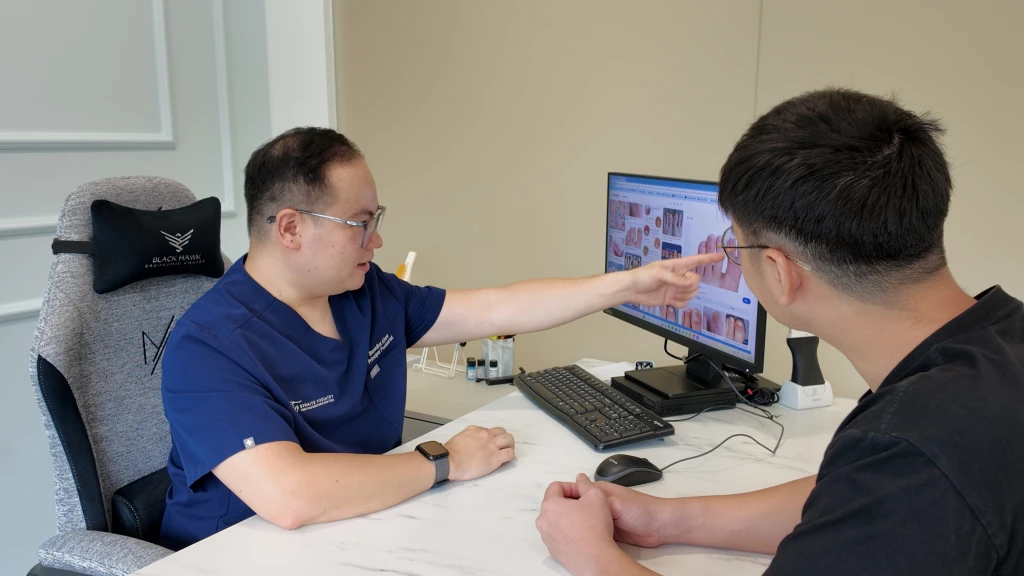
A fungal nail rarely clears with one method used on its own, because the fungus sits inside a thickened nail plate and in the skin and footwear around it. At Straits Podiatry, PACT is used only after our Podiatrists determine your suitability for treatment. It is used within one reviewed plan alongside nail reduction and a topical antifungal, so the thickened nail is reduced first, the light reaches the fungus more effectively, and the topical keeps working between sessions. The plan is checked at each visit and adjusted based on how the nail responds, and honest guidance is given when an infection is unlikely to respond to phototherapy alone.
Speak with our team or book a consultation to have your fungal nail assessed and a suitable plan mapped out at any of our three clinics in Buona Vista, Orchard, and Paya Lebar.
Frequently Asked Questions About PACT Therapy
Does PACT therapy hurt?
No. PACT is a painless procedure with no needles and no heat. The blue gel is applied to the nail and the skin around it, left to soak in, then exposed to a specific wavelength of light. You feel the light resting on the toe and nothing more, so most people simply read or use their phone through the session. There is no recovery period afterwards, no dressing, and you walk out and put your shoe straight back on. This comfort is one of the main reasons it suits children, older adults, and anyone who would rather avoid the heat sensation that comes with some other nail fungus options.
How many PACT sessions does it take to clear a fungal nail?
It varies with how thick the nail is, how many nails are affected, and how long the infection has been there. A standard course is 3 to 6 sessions, commonly spaced 3 to 7 days apart with a month’s break every 3 sessions, then reviewed. A mild single-nail infection may settle in a single course, while a thicker, long-standing one across several nails usually needs slightly more. Because the nail grows slowly, clear nail appears gradually from the base over several months rather than straight away, even when the fungus is responding. The number of sessions is reviewed at each visit and matched to how your nail is actually improving.
Does PACT actually work on fungal nails?
PACT can knock back the fungus it reaches at each session, and it is genuinely useful, but the honest answer is that phototherapy on its own is rarely enough. The fungus also lives deep in the nail plate and in the surrounding skin and shoes, which a single pass of light does not touch. That is why it is used as part of a combined plan here, with the nail reduced first so the light reaches further and a topical antifungal working between sessions. Used that way, alongside patience while the nail grows out, it gives a fungal nail a fair chance to improve.
Is PACT safe for people with diabetes or those on several medications?
Yes. PACT is applied topically and nothing is absorbed into the bloodstream, so it does not interact with medication taken for diabetes, blood pressure, cholesterol, blood thinning, or after an organ transplant. That is a real advantage for anyone who would otherwise be steered towards oral antifungal tablets, which need liver monitoring and can clash with other drugs. For a person with diabetes, a fungal nail is not only a cosmetic issue, since it can become an entry point for secondary infection, so it is best looked at alongside a diabetic foot screening at the same visit.
How is PACT different from laser treatment?
Both are light-based, but they work in opposite ways. Laser relies on heat, using a focused beam to raise the temperature at the nail and damage the fungus, which is why it can feel warm or briefly sharp and, where the heat is not carefully controlled, carries a risk of thermal injury to the nail bed and the surrounding skin. PACT uses no heat at all. It pairs a photosensitiser gel with a specific wavelength of light, and the reaction happens only where the gel sits on the fungal cells, so the surrounding tissue is largely left alone. That difference is why PACT is comfortable, needs no downtime, and suits people who would rather avoid the heat sensation, including children and older adults. Neither approach guarantees a cure, and a fungal nail still does best treated as part of a combined plan, but for many people the no-heat route is the gentler place to start.
Can a fungal nail come back after PACT?
Yes, recurrence is common, because the fungus that infects the nail also lives in your shoes, socks, bath mat, and the skin between your toes, so it can be reintroduced. After a PACT plan, the advice focuses on keeping the next infection out: dry your feet properly, rotate and air your footwear, disinfect or replace shoes worn during the active infection, treat any athlete’s foot at the same time, and trim nails carefully so you do not re-seed the fungus. People who keep recurring sometimes benefit from periodic reviews. PACT helps clear the current infection, but daily habits are what keep it from returning.