Plantar Wart Removal in Singapore

At first, a plantar wart can feel like a small rough patch under the foot that you notice with every step. Though it might look minor on the surface, the discomfort can feel sharp and oddly specific, especially when you load the same spot on the heel or ball of the foot. And as pressure continues, the area can start to feel thicker and more tender, which makes walking feel less natural than it should.

Once that same spot starts acting up repeatedly, the pain becomes harder to ignore. You might notice it more when walking barefoot at home, standing for longer periods, or pushing off during faster walking or exercise. This happens because the wart sits on a weight bearing area, so each step keeps driving pressure into the same point.

Sometimes, plantar warts settle on their own. Still, when pain begins affecting how you walk or the infected area starts spreading, it helps to act early rather than letting it worsen. To be sure it’s a plantar wart and not something else, it helps to know some of the more common symptoms.

illustration of wart anatomy skin infection

Symptoms of Plantar Warts

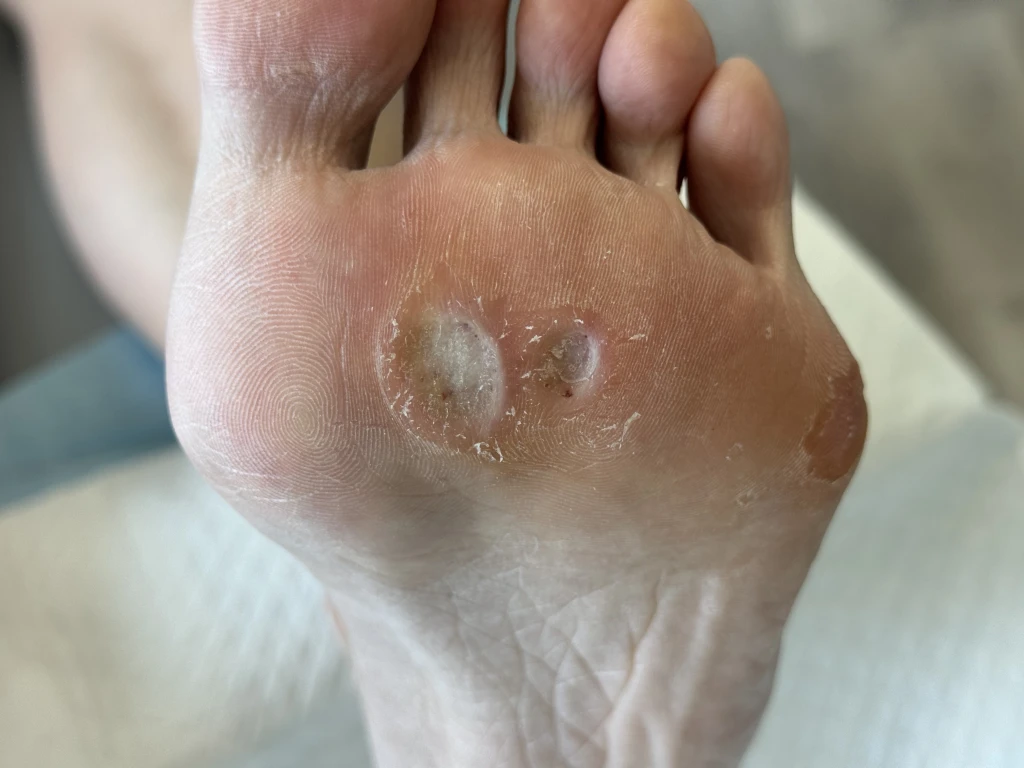
Plantar warts are small, rough growths that form on the sole of the foot, most commonly around the base of the toes, the ball of the foot, or the heel. Because they develop on weight bearing areas, they often get pressed inward over time, which can cause a thicker, hardened layer of skin to form over the wart and make each step feel more uncomfortable.

  • A small rough patch on the sole that becomes thickened or callused over time.
  • Tiny black pinpoints on the surface, often called “wart seeds”, which are small clotted blood vessels.
  • Pain or tenderness when standing, walking, or pressing directly on the area, sometimes causing you to change how you walk.
  • Some plantar warts are deeper and more painful (myrmecial type), and feel like a sharp, pinpoint “stone bruise” when you step on them.
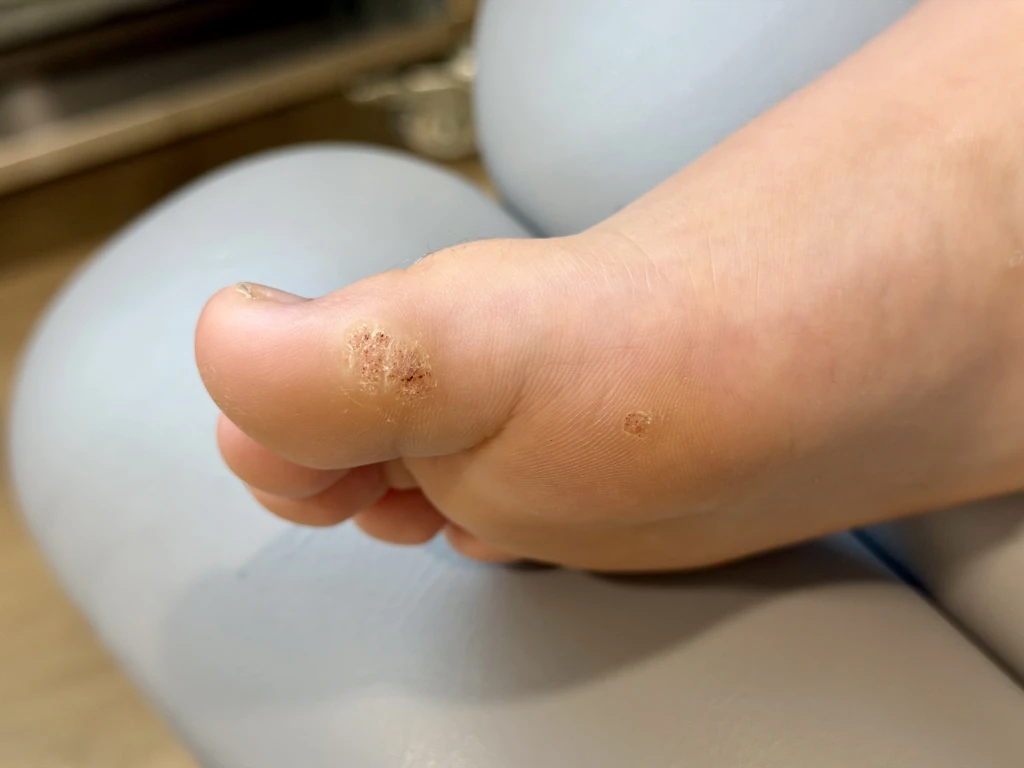
  • Multiple warts that group together into a wider patch are known as mosaic warts, which are often less painful than myrmecial plantar warts.

Note: The Human Papillomavirus (HPV) can cause different patterns of plantar warts. Deeper, more painful myrmecial warts are often linked to HPV type 1, while more superficial warts, including mosaic types, are often linked to HPV type 2. Warts can also form around the toenails (periungual warts), which often become painful or irritating because of repeated friction.

patient with plantar wart

Need Help?
See A Podiatrist Today

Causes of Plantar Warts

When HPV infects the outer layer of skin on the sole of the foot, it triggers a localised skin infection that forms a plantar wart. Since HPV spreads through surface contact, risk rises when the skin barrier is compromised and the feet are exposed to shared environments where the virus is commonly picked up.

What Increases HPV Exposure and Spread?

  • Broken skin, including small cuts, cracks, or scrapes, can create entry points for HPV.
  • Walking barefoot in shared areas such as swimming pools, locker rooms, communal showers, and gym floors.
  • Touching or picking at a wart, which can spread the virus to nearby areas and lead to more warts.

Who Carries Higher Baseline Risk?

  • Children and teenagers, since their immune response to HPV is still developing and exposure in shared spaces is common.
  • People with weaker immune systems, since the body might have more difficulty fighting off the virus once it enters the skin.
patient with plantar wart on sole of foot singapore

Managing and Preventing Plantar Warts

Plantar warts can be stubborn once they settle into the skin, especially on parts of the foot that take pressure every day. Because of this, management works best when spread is limited early and discomfort is controlled during walking. At the same time, the approach varies based on where the wart sits, how much pressure it takes, and whether it is a superficial plantar wart, a mosaic cluster, or a deeper myrmecial type.

To start, the focus is on calming irritation and limiting further spread while keeping daily activity manageable:

  • Avoiding picking at or cutting the wart, which can spread the virus to nearby skin.
  • Keeping the area clean and dry, particularly after exercise or long periods on your feet.
  • Covering the wart when needed to reduce friction and direct pressure during walking.
  • Reducing pressure through the painful area with footwear adjustments or targeted padding where appropriate.

When warts persist despite these measures, targeted podiatry treatments can be introduced to address the tissue more directly:

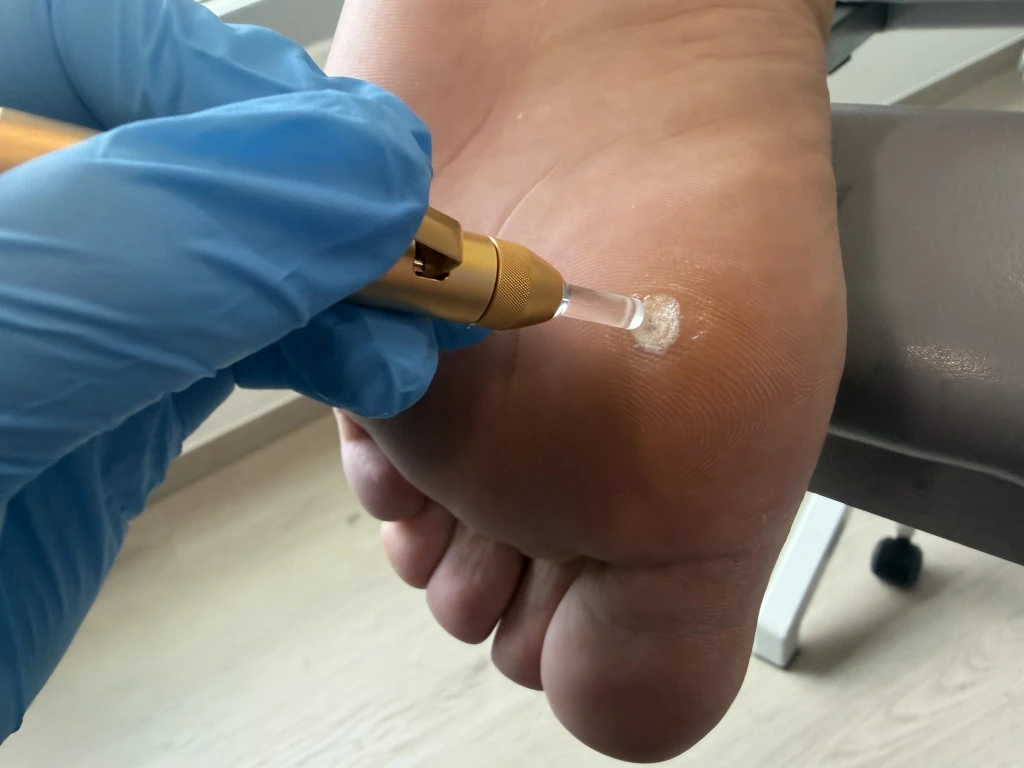
  • Cryotherapy, using controlled applications of liquid nitrogen to freeze and destroy wart tissue over repeated sessions.
  • Debridement, where thickened skin is carefully shaved down and combined with topical salicylic acid applications for small or superficial warts.
  • Wart needling or curettage procedures, which physically target and remove wart tissue when additional intervention is needed.

After treatment, the focus shifts to keeping the area settled as the skin heals. In practice, this means reducing repeated pressure through the same spot and wearing footwear in shared wet areas to limit exposure. As irritation eases and the skin recovers, discomfort often settles and everyday walking feels more natural again.

podiatrist performing wart cyrotherapy treatment on patient

Have Your Plantar Wart Removed at Straits Podiatry

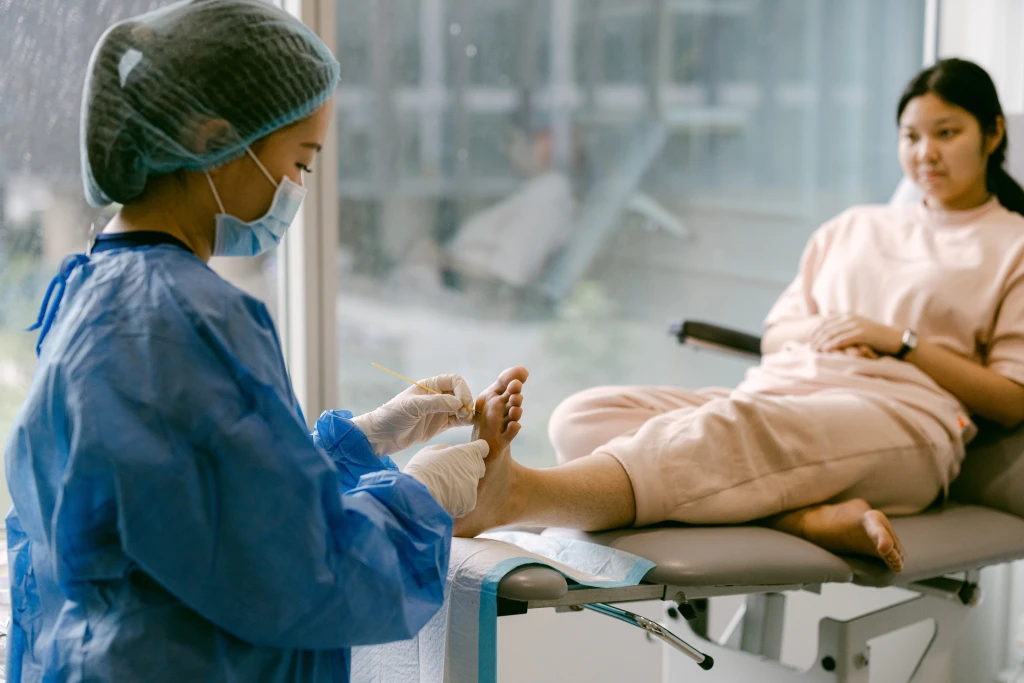
When a plantar wart keeps pressing into the sole of the foot and starts affecting daily comfort, it helps to have it assessed properly. At Straits Podiatry, we begin by confirming the diagnosis, then assess the wart type, its location, and the amount of pressure going through the area during daily movement.

Once the assessment is clear, we’ll put together a plan that fits your routine. This can include targeted removal methods such as cryotherapy, wart needling, or curettage, along with clear aftercare guidance focused on protecting the skin and reducing the chance of recurrence as the area settles. Speak with our team or book a consultation for an assessment and a personalised plan to remove your plantar wart.

Share this with someone you know

Frequently Asked Questions About Plantar Warts

Plantar warts, also known as verrucae, are viral skin growths that develop on the sole of the foot. They form when HPV enters through small breaks in the skin and causes a localised overgrowth. Because they sit on weight-bearing areas, they are repeatedly pressed during walking, which explains why they often grow inward and feel more uncomfortable than warts in non-weight-bearing areas.

A plantar wart often begins as a rough or thickened patch that becomes more noticeable under pressure. Over time, small black pinpoints can appear on the surface, commonly called “wart seeds”, which are clotted blood vessels within the wart. With continued loading, pain or tenderness can develop during standing or walking. Some plantar warts sit deeper and feel sharply painful, while others spread into flatter mosaic clusters and tend to be less painful.

Pain under the foot often causes people to shift weight away from the affected area without realising it. This can change how you walk, stand, or push off, particularly over longer periods on your feet. While this reduces discomfort temporarily, it can place extra strain on other parts of the foot or ankle, sometimes leading to secondary aches or fatigue.

Yes. HPV spreads through skin contact and contaminated surfaces, particularly in warm, damp environments such as swimming pools, locker rooms, and communal showers. The virus can also spread to nearby skin if the wart is picked at or repeatedly irritated. Wearing footwear in shared areas and avoiding direct contact with the wart helps reduce transmission.

Some small plantar warts resolve on their own, but removal is often considered when pain is present or daily walking is affected. Treatment is selected based on the wart type, its location, and how much pressure passes through the area. Options can include cryotherapy using liquid nitrogen, debridement with topical applications for superficial warts, or wart needling and curettage procedures for more stubborn cases.

Have an Enquiry?
Reach out to us!

You May Also like