Sesamoiditis Pain Symptoms, Causes, and Management

At first, it feels like a minor soreness under the big toe. You can still walk, still move, and still get through your day, but the ball of the foot starts to feel tender, especially when you push off or walk barefoot. When that same spot keeps acting up, one possible cause is sesamoiditis, an irritation of the structures beneath the big toe joint.

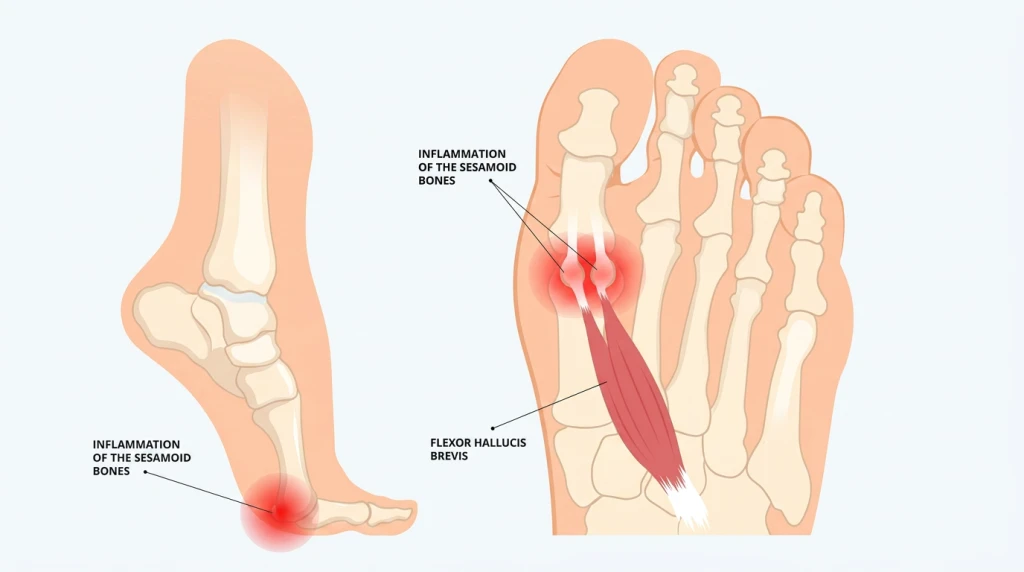
Although the sesamoids are small, they sit in a high-pressure area under the big toe joint. They help absorb impact and reduce friction as the toe bends through each step, which is why irritation here often shows up during simple everyday movements. Instead of feeling like general foot pain, it tends to feel localised and annoyingly specific.

In the early stages, signs can be subtle and easy to brush aside. Yet over time, the discomfort can become more consistent, especially with walking, standing, stairs, or exercise that loads the forefoot. To recognise it early and avoid letting it build, it helps to know the most common symptoms of sesamoiditis.

illustration of foot for sesamoiditis condition explained

Symptoms of Sesamoiditis

Sesamoiditis usually develops gradually, starting as a mild discomfort under the big toe that becomes harder to ignore over time. Because the sesamoids sit directly under a high-pressure part of the foot, symptoms often show up most during everyday movement, especially when you push off the front of the foot. Common symptoms include:

  • Bruising – Less common, but you might notice bruising if the area has been irritated further by impact, a sudden misstep, or additional strain on top of the inflammation.
  • Difficulty bending the big toe – The joint can start to feel stiff or guarded, and bending the big toe might feel uncomfortable, limited, or simply “not smooth”.
  • Pain under the big toe – A deep, localised ache under the big toe joint that often starts mild, then sharpens when the area is repeatedly loaded.
  • Pain with walking or weight bearing – Pain tends to flare when standing for longer periods, shifting weight, climbing stairs, or walking more than usual, especially when the forefoot is doing most of the work.
  • Redness – As irritation builds, the skin around the big toe joint might look redder than the surrounding area, especially after activity.
  • Swelling – The ball of the foot can become puffy or tender to touch, and swelling might make the area feel more sensitive inside shoes.

Need Help?
See A Podiatrist Today

Causes of Sesamoiditis

With this understanding that sesamoiditis often shows up as a stubborn ache under the big toe, it helps to recognise what keeps the irritation going. This is tied to where the sesamoids are located and how much load they take on. Found beneath the big toe joint and embedded within tendons, they support push off and help the toe move smoothly under load. When repeated pressure through the ball of the foot builds faster than the area can recover, inflammation develops around the joint, and discomfort starts returning more easily with everyday movement

What Increases Load on the Sesamoids?

  • Running and jumping, where the forefoot absorbs force repeatedly during push off.
  • Sports such as football, where sprints, pivots, and rapid direction changes concentrate load under the big toe.
  • Forefoot dominant activities including dance and court sports, where the toe joint is repeatedly driven into extension.
  • Overpronation, where the foot rolls inward excessively and shifts more strain toward the big toe region.
  • Footwear that pushes pressure forward, especially high heels or shoes with limited cushioning and support.
  • A sudden rise in walking or training volume, where the tissue load climbs before it has time to adapt.

Who Carries Higher Baseline Risk?

  • Foot mechanics such as high arches or flat feet, which change how force is distributed through the forefoot.
  • People who spend long hours on their feet, where the load becomes cumulative rather than occasional.
  • Higher body weight, which increases pressure through the ball of the foot with every step.
  • A history of recurring big toe or forefoot pain, where the area tends to flare more easily under stress.

In rarer cases, forefoot pain that feels like sesamoiditis might be linked to something else entirely, which is why it helps to recognise the conditions most commonly mistaken for it.

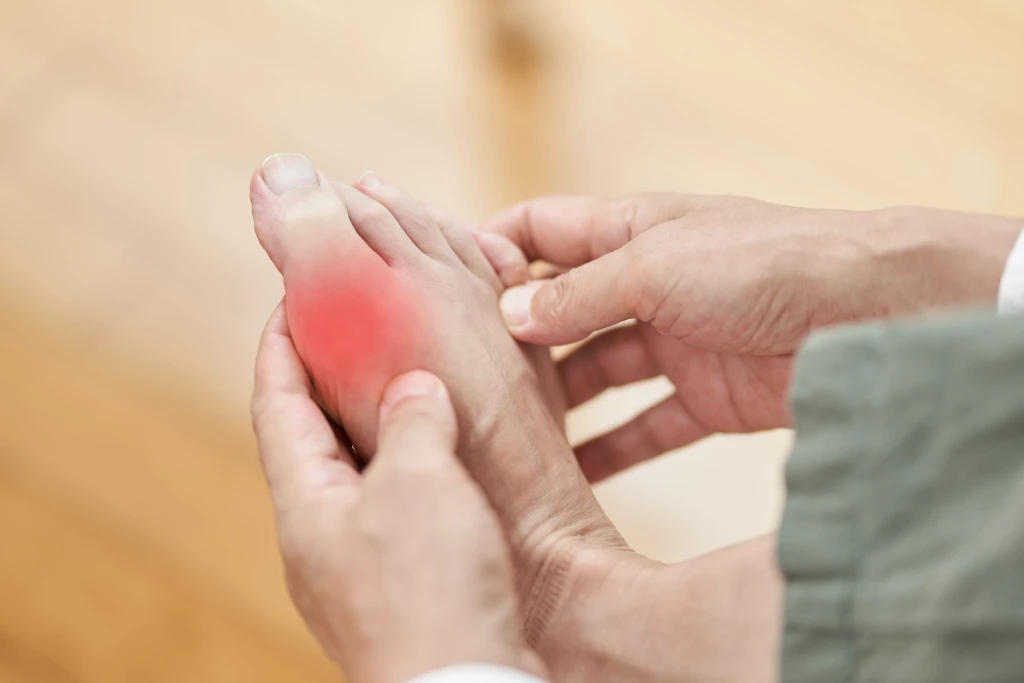
patient with sesamoiditis pain on the foot

Conditions Commonly Mistaken for Sesamoiditis

Because sesamoiditis often shows up as a focused pain around the ball of the foot, it can be mistaken for other conditions that affect the big toe region. While the symptoms might feel similar at first, the cause behind them is often different, which is why getting the diagnosis right matters.

  • Bursitis – Inflammation of soft tissue cushioning near the joint can cause local pain and swelling that feels similar to sesamoiditis. However, bursitis is centred around the surrounding tissue rather than the sesamoid bones beneath the big toe joint.
  • Bunions Bunions are bony bumps at the base of the big toe that often cause soreness, swelling, and redness, especially in shoes. Unlike sesamoiditis, which is usually felt under the joint with push off, bunions are linked to joint misalignment and develop gradually over time.
  • Gout Gout frequently targets the big toe joint and is known for sudden, intense pain with redness and swelling. Compared to sesamoiditis, which tends to build with repeated stress, gout flares occur in episodes and can feel dramatic when they strike.
  • Hallux rigidus Hallux rigidus (osteoarthritis) involves wear and stiffness within the big toe joint, often causing pain during toe bend and reduced movement. Sesamoiditis tends to feel more localised under the joint, where pressure builds around the sesamoids during weight bearing and push off.
  • Pseudogout – Pseudogout can cause sudden pain, swelling, warmth, and redness around a joint, and it can sometimes be mistaken for sesamoiditis when symptoms flare near the big toe region. Unlike sesamoiditis, which usually builds gradually from repeated pressure under the big toe, pseudogout is driven by inflammation triggered by calcium pyrophosphate crystal deposits and often feels more abrupt.

Managing and Preventing Sesamoiditis

Once the causes are clear, the next step is to reduce pressure under the big toe while giving the irritated tissues time to settle. Management works best when it lowers day to day flare ups first, then rebuilds tolerance so the forefoot can handle walking, standing, and sport again without repeatedly provoking the same spot. A podiatrist can tailor this approach around your activity demands, footwear, and foot mechanics, pacing recovery so improvements feel steady rather than stop start.

To begin, focus on measures that calm irritation and reduce discomfort, while still keeping you moving safely:

  • Resting from activities that load the forefoot heavily, such as running, jumping, and repeated push off.
  • Limiting barefoot walking at home, since it increases pressure through the ball of the foot.
  • Using ice and elevation when symptoms spike, especially after longer days on your feet.
  • Short term medication such as non-steroidal anti-inflammatory drugs (NSAIDs), where appropriate, to reduce pain and inflammation.

Next, reduce the ongoing stress on the sesamoids by improving support and offloading the painful area during everyday walking:

  • Put on supportive footwear with better cushioning under the forefoot.
  • Get customised foot orthoses (insoles) designed to redistribute pressure away from the sesamoids and spread load more evenly across the foot.

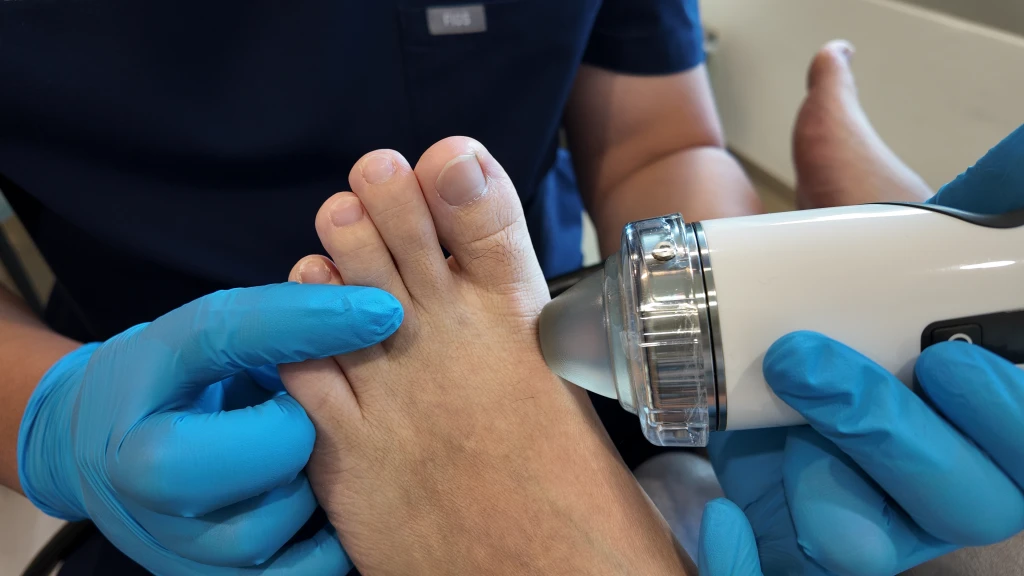
If symptoms persist despite consistent care, non-invasive therapy can also be added to support recovery:

Finally, prevention helps reduce the chance of repeated flare ups as you return to activity. Instead of jumping straight back into full running or sport, build activity up in stages, especially for anything that involves repeated push off through the big toe. Alongside this, supportive footwear and customised insoles continue shifting pressure away from the sesamoids, so daily walking stays comfortable and the forefoot is less likely to flare again.

Have Your Sesamoiditis Pain Managed at Straits Podiatry

When pain under the big toe keeps returning and starts making walking uncomfortable, it helps to get it checked properly. At Straits Podiatry we start by confirming whether the pain is coming from the sesamoid area, then look at what is putting repeated stress through the ball of the foot. This includes your activity levels, the shoes you wear most, and how your foot is taking load as you walk. Where useful, ultrasound imaging can also help us assess the tissues around the big toe joint more closely.

Once we know what is driving the irritation, we’ll put together a plan that fits your routine. This can include footwear guidance, customised insoles to take pressure off the sesamoids, and simple adjustments to how you pace walking and exercise while the area settles; if symptoms persist, ESWT can also be arranged. Speak with our team or book a consultation for an assessment and a personalised plan to manage your sesamoiditis pain.

Frequently Asked Questions About Sesamoiditis

Sesamoiditis is inflammation and irritation around the sesamoid bones beneath the big toe joint. It usually builds up from repeated pressure through the ball of the foot, especially during running, jumping, and sports that involve frequent push off. Footwear that shifts load forward can also aggravate it. Certain foot mechanics, including high arches or flat feet, can place more stress under the big toe and raise risk.

Sesamoiditis pain is usually localised under the big toe joint rather than spread across the whole foot. It often worsens when you walk more than usual, climb stairs, push off, or bend the big toe, and it tends to ease when you rest. The area can feel tender when pressed, and it might feel sore in shoes, especially when the forefoot is loaded.

Both can cause pain around the big toe, but the pattern is different. Gout often hits suddenly, with intense pain that can come with redness, warmth, and swelling, even at rest. Sesamoiditis usually develops gradually and flares with walking, standing, and push off through the forefoot. If pain escalates quickly and feels unusually severe, it is worth getting assessed properly.

A podiatrist can confirm whether the pain is coming from the sesamoid area and identify what is overloading the joint. Care often includes footwear guidance, activity pacing, and customised insoles to shift pressure away from the sesamoids while you stay active. If symptoms remain stubborn, ESWT can also be discussed as part of a broader plan to reduce pain and support recovery.

It depends on how long it has been flaring, how much daily walking you do, and how effectively pressure is reduced under the big toe. Mild cases often improve within weeks with proper offloading and pacing. More persistent cases can take longer because the sesamoids get stressed with every step. The aim is steady improvement, without small flare ups repeatedly resetting progress.

Share this with someone you know

Have an Enquiry?
Reach out to us!

You May Also like