
Ingrown Toenail or Infection? How to Tell the Difference (And When to Act Fast)
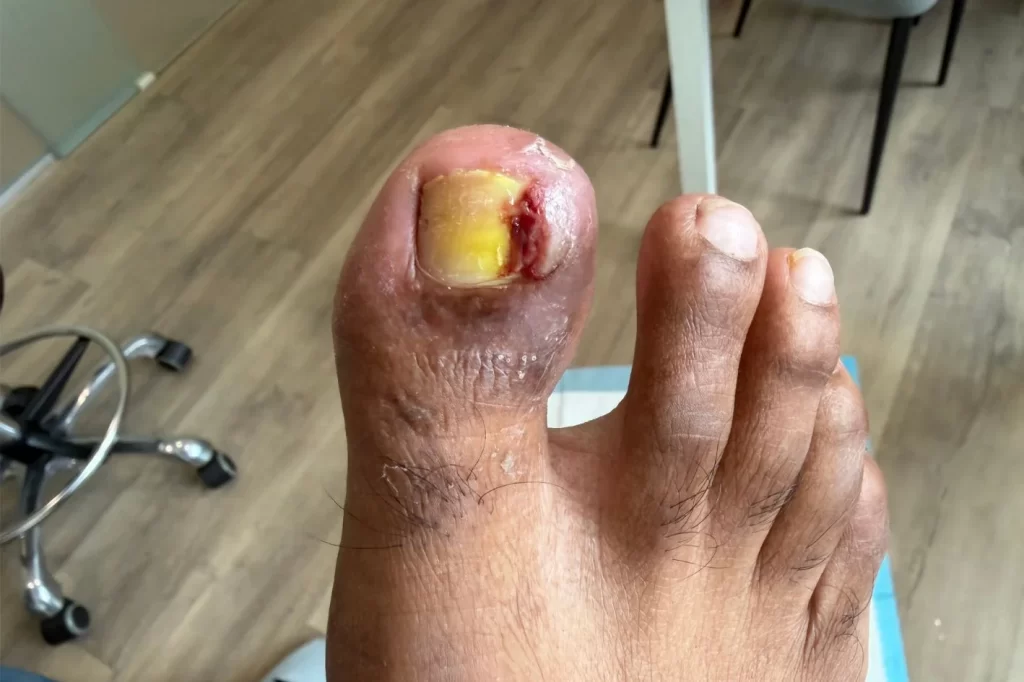
That sharp twinge at the corner of your toenail probably started small. Maybe it was only sore when you pressed on it, or when the edge of your shoe caught it just right. But now the skin around the nail looks different: a little redder, a little puffier. You are not sure whether to soak it at home, leave it alone, or book an appointment.
This is one of the most common situations our podiatrists see in the clinic. And the honest answer is: it depends on what you are looking at. An ingrowing nail that is simply irritated behaves very differently from one that has developed a genuine infection, and the two require different responses.
So how can you tell the difference between a mild irritation and a brewing infection, and what to do about it? Let us walk you through the stages and the appropriate ingrown toenail treatment at each stage.
Stage 1: Irritation Without Infection
An ingrown toenail in its earliest stage causes physical irritation from the nail edge pressing into the soft tissue of the nail groove. The skin has not broken down yet, and there is no bacterial involvement.
The signs typically look like this:
- A sharp or tender sensation at one or both corners of the nail, most noticeable when pressure is applied
- Mild pinkness or flushing of the skin alongside the nail edge
- Slight puffiness of the tissue near the nail corner
- Discomfort when wearing enclosed shoes, particularly narrow ones
At this stage, the body’s natural skin barrier is still intact. The nail is creating mechanical pressure, but bacteria have not had the opportunity to establish themselves in the tissue.
This is the best time to act. Conservative home care is most effective at Stage 1, and there is often no need for a clinical procedure. There are some ingrown toenail home remedies that you can safely do at this point and, importantly, what to avoid.
Stage 2: Increasing Inflammation
If the pressure from the nail is not relieved, the irritation progresses. The skin starts responding more aggressively, and the signs become harder to ignore:
- The redness deepens and spreads slightly beyond the nail corner
- The tissue around the nail becomes more noticeably swollen
- Pain increases with walking, particularly in enclosed footwear
- Even light, incidental contact with the toe causes discomfort
- The area may feel warm compared with the rest of the toe
At this point, the boundary between simple irritation and early infection is approaching. The swelling is significant, and if the nail has breached the skin surface, bacteria can begin entering the tissue. Home care alone becomes less reliable here.
A podiatry assessment at Stage 2 gives you the clearest picture of what is happening and what is appropriate: whether conservative in-clinic nail edge management is sufficient, or whether the shape or depth of the nail and the degree of swelling warrant a minor procedure.
Stage 3: Active Infection (Paronychia)
The skin finally breaks down, allowing bacteria to colonise the area, and the ingrown toenail becomes infected. This is also called paronychia, a bacterial infection of the nail fold. The signs are distinct:
- Discharge or pus: yellowish or greenish fluid seeping from where the nail meets the skin. This is a definitive sign of infection.
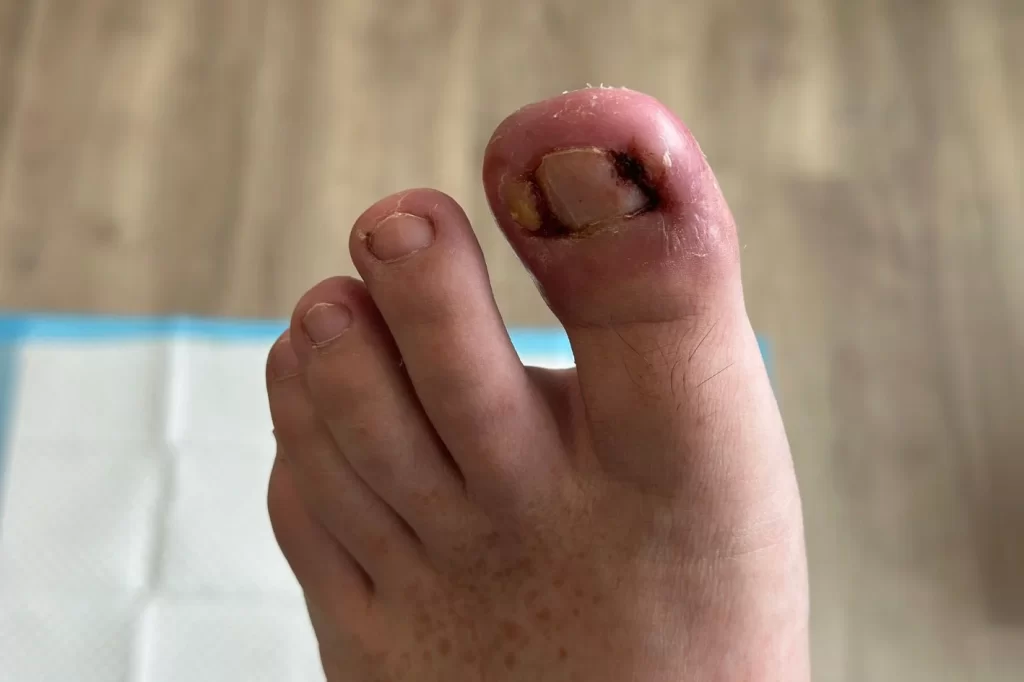
- Pronounced swelling: beyond the immediate nail fold, extending up the side of the toe or onto the toe pad.
- Intense or constant pain: not just with pressure, but at rest. The throbbing quality is characteristic of active infection.
- Heat: the infected area is clearly warmer than the surrounding skin and the other foot.
- Overgrowth of the skin: the soft tissue beside the nail may begin to grow over the nail edge. This is hypergranulation tissue, which forms as the body tries to protect the area. This is usually a sign of an established infection.
Unfortunately, in Singapore’s humid climate, infection happens more easily and quickly than in cooler, drier environments. Especially when you wear enclosed shoes, warmth and moisture (sweat) create the best conditions for bacteria to grow quickly around an already-irritated nail fold. This is one reason why ingrown toenails that are initially mild can become quite problematic within a short window, particularly during school terms or after sports.
At Stage 3, home care usually causes more problems than being helpful. You need to see a podiatrist to assess the nail fold and receive treatment. In many cases, the infected edge of the nail needs to be removed to allow the area to drain and heal. Surface antiseptics alone will not address the infection at its source.
Signs That Mean You Need Care Today, Not Tomorrow
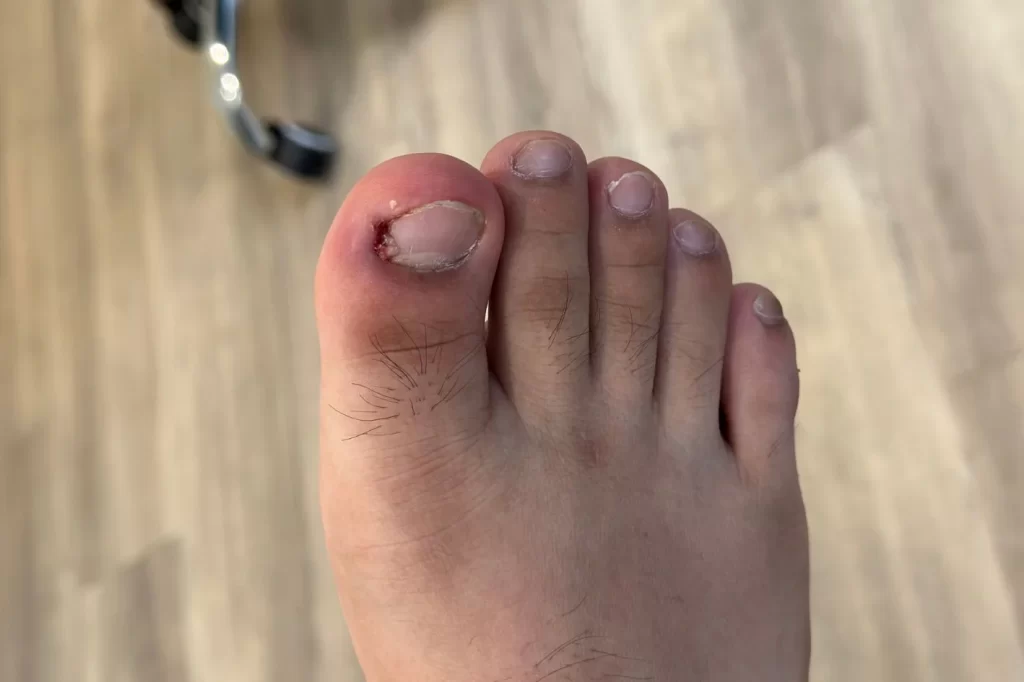
Some cases require quick help and urgent attention. Do not wait for a routine appointment if you notice any of the following:
- Pus is present, and the swelling appears to be growing rather than stable
- The entire toe is red, swollen and warm to touch
- Red streaking extending up the toe or along the foot (this may indicate cellulitis, a spreading skin infection that requires prompt treatment)
- Fever or chills alongside a very painful, swollen toe
- You have diabetes, poor circulation, or are immunocompromised
- You cannot bear any weight on the foot
These are not situations to manage independently. Please seek professional care on the same day if possible.
Need Help? See A Podiatrist Today
Why People with Diabetes Must Act at Stage 1
For a healthy individual, an infected ingrown toenail is painful and disruptive but is usually manageable with prompt professional care. But for persons with diabetes, the risk becomes significantly different. Both reduced circulation and peripheral neuropathy (nerve damage) change how the body detects, responds to, and recovers from infection in the feet.
Reduced sensation means numbness or the inability to feel pain, which is our body’s normal warning system. A person with significant neuropathy might have a seriously infected toenail that does not feel particularly severe.
If circulation is also reduced, the immune system can no longer deliver adequate resources to fight the bacterial infection, which slows tissue healing.
If you have diabetes, you should see a podiatrist promptly if you notice any slight redness, puffiness, or warmth around a toenail, even at Stage 1. Sitting on the problem often leads to regrettable outcomes for individuals suffering from diabetes.
Common Mistakes People Make When Unsure
Waiting to see if it gets better on its own
A Stage 1 ingrown toenail can sometimes resolve if the nail grows past the pressure point and you change the habits contributing to it. A Stage 3 infected toenail will not resolve without intervention. Waiting once infection is established almost always extends recovery time.
Attempting to cut or dig out the nail corner at home
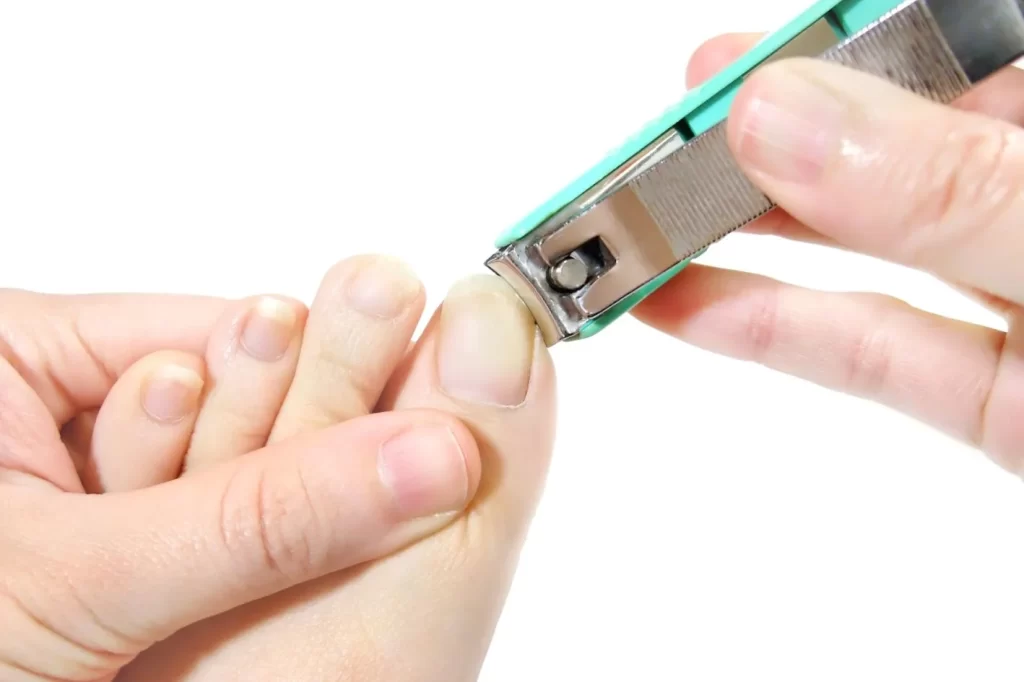
This kind of bathroom surgery can be very risky, but it is tempting because the pain seems to originate from one specific point. The problem is that cutting too short or digging under the nail edge introduces bacteria into already inflamed skin, often pushes the nail edge deeper into the tissue, and typically makes the subsequent clinical management more complex. Doing this often also throws you into the evil cycle of having repeated ingrown toenails whenever the nail grows out.
Applying antiseptic and assuming the problem is contained
Antiseptics address the skin surface only. It often does not reach the nail-to-skin contact point where bacteria are growing in an infected nail fold. It has a limited supportive role at Stage 1, but tends to provide a false sense of security at Stage 3.
Taking antibiotics without removing the source
Antibiotics require a medical prescription in Singapore and should only be taken under medical advice. But that is not the main point. What’s more important is that antibiotics alone cannot fully resolve a paronychia if the infected nail edge is still physically present and irritating the tissue. The nail issue needs to be addressed alongside or before antibiotic treatment to achieve lasting relief.
What You Are Seeing, and What to Do
If you are unsure where your situation sits, use this as a starting point:
Mild tenderness and slight pinkness only: Home care and monitor closely.
Swelling, increased pain, or warmth: Book a podiatry appointment this week.
Pus, significant swelling, or persistent heat: See a podiatrist today.
Fever, red streaking, or a diabetic patient with any of the above: Seek urgent care now.
What Happens When You Come To Straits Podiatry
When you book an appointment with us for a suspected infected ingrown toenail, here is what our assessment usually involves:
- We examine the nail edge, the depth of the nail that is in the skin, the degree of swelling, and whether pus is present
- We check for signs of worsening infection that goes beyond the nail fold
- We go through your medical history, including diabetes, blood thinners, or immune conditions that may affect treatment options
- We determine whether conservative nail edge trimming is sufficient or whether a minor procedure is necessary
- Once the direction is clear, we manage it on the same visit and provide clear guidance on subsequent care and follow-up
Most consultations for ingrown toenail infection are completed within 30 to 45 minutes. When a partial nail avulsion is needed, the procedure is performed with numbing of the toe only. Most patients walk out comfortably after and are back to sports in a few weeks.
When in Doubt, Have It Checked
Taking action before the infection takes control means more conservative options are available and recovery is faster. If you are already past that point, seeing a podiatrist in Singapore will help you resolve it more quickly and safely than waiting.
At Straits Podiatry, we assess the nail, the depth of irritation, and whether infection is present before recommending any course of action. If you are currently having pain, it’s probably time to book a consultation with our Podiatrists at our Buona Vista, Katong, or Orchard clinics today.
Latest Articles

Tagged ingrown toenail