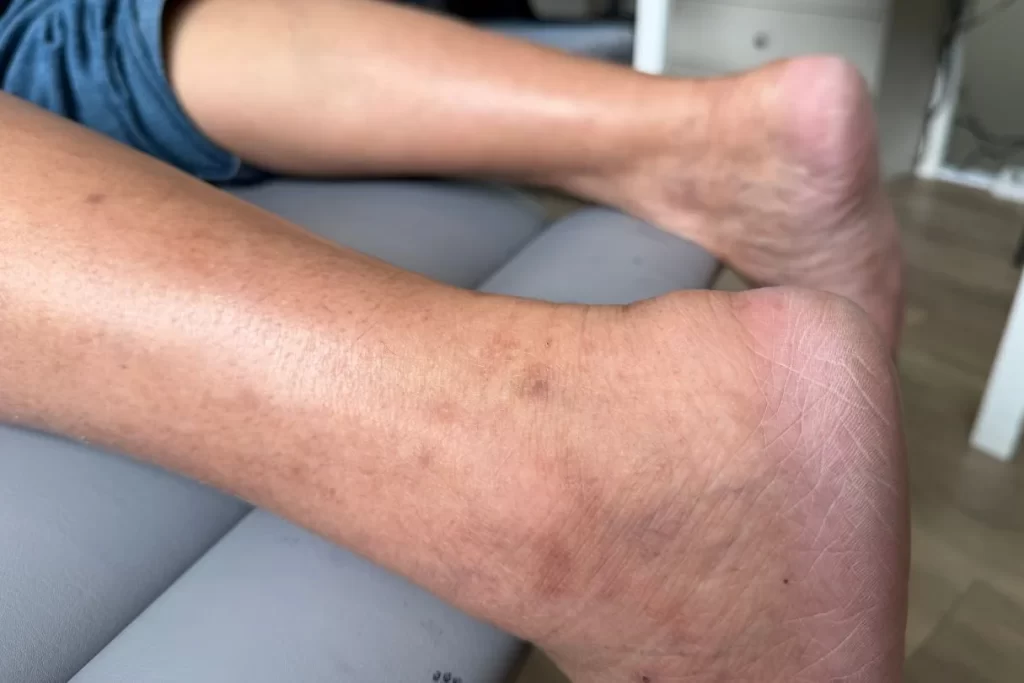
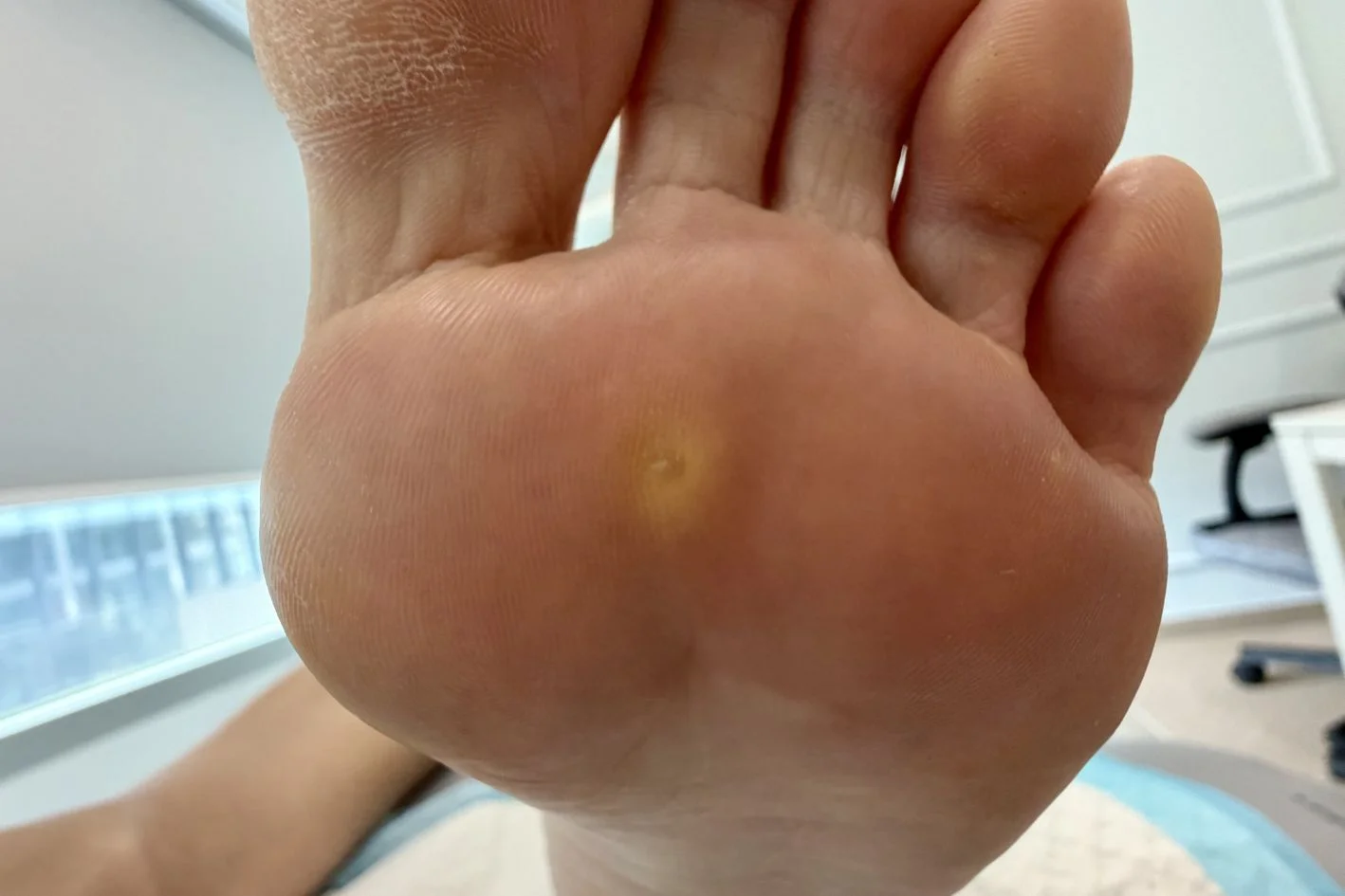
A foot corn can make walking painful, especially when it develops on parts of the foot that take repeated pressure, such as the toes, the ball of the foot, or the sole. While it might look like an insignificant patch of thickened skin, the discomfort can feel sharper than expected because pressure is repeatedly applied to the same area each time you stand or step.
This is the result of the skin responding to repeated friction or loading over time. In response, it thickens and hardens to protect the area. Yet as that patch becomes denser and more compact, it can start focusing pressure into the underlying soft tissue. So, what begins as the body’s protective response can gradually become a very localised source of pain during walking, standing, or wearing certain shoes.
Because of this, a foot corn isn’t just a cosmetic issue that you happen to notice. It often becomes a problem you feel in distinct ways throughout the day, which is why it helps to start with the symptoms before looking more closely at its causes and removal options.
Symptoms of Foot Corns
Foot corns usually become noticeable when one small area starts causing repeated discomfort in daily activity. Rather than affecting a broad part of the foot, the symptoms are often centred around a distinct pressure point.
- A small, well-defined area of thickened skin.
- A firm central core within the area.
- Pain when direct pressure is applied.
- Pain during walking or standing.
- Discomfort when shoes press or rub against it.
- Skin around the area that feels tender or irritated.
Need Help? See A Podiatrist Today
Types of Foot Corns
There are various types of foot corn, with each having its own texture, depth, and pattern of discomfort. Some are easier to spot while others develop in less obvious areas or become more painful because of where they form and how pressure is applied to them.
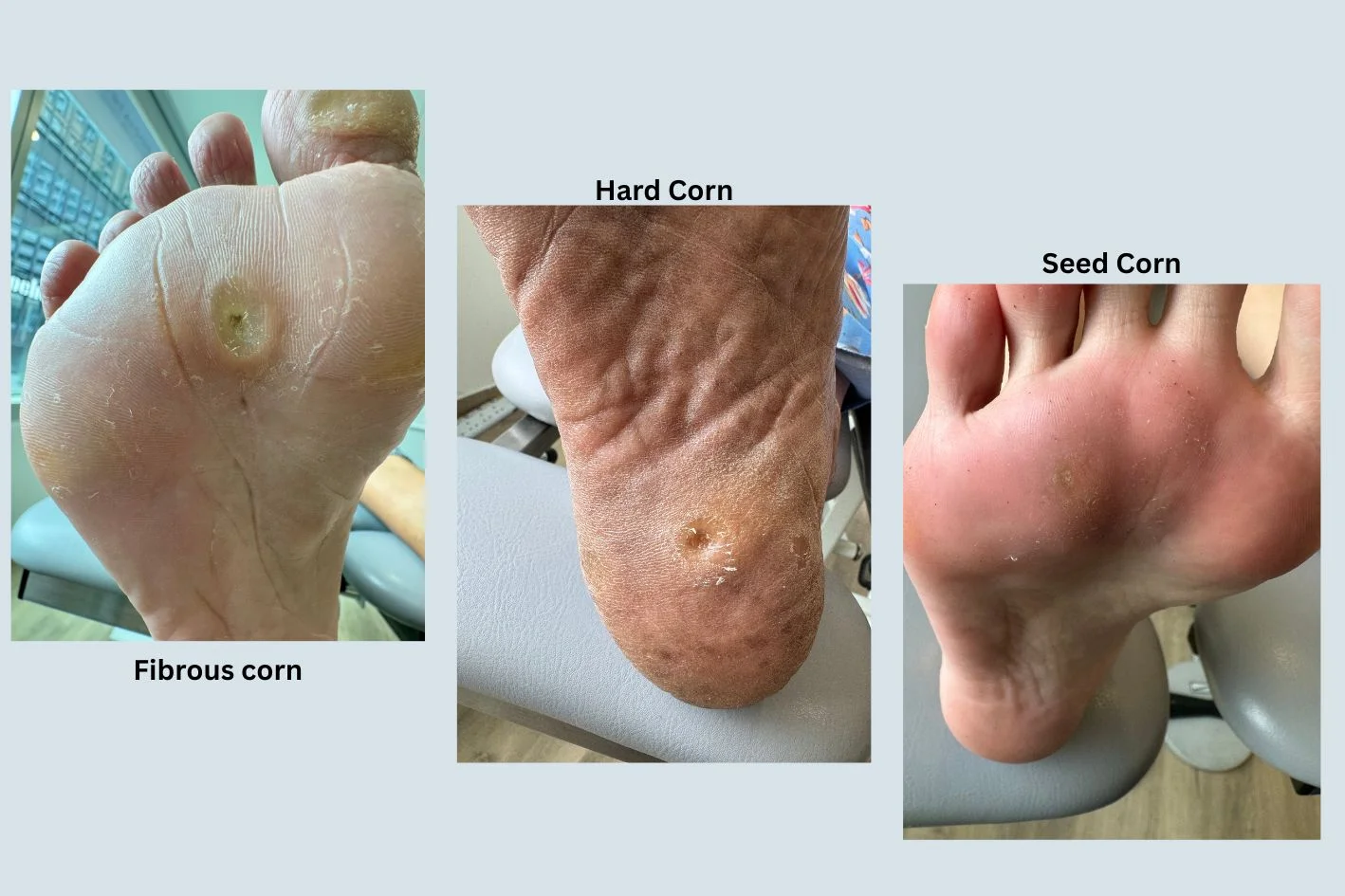
Hard Corn
This is the most common type of foot corn. It usually appears as small, dense, firm areas of thickened skin and often develop on the tops of the toes or on the soles of the feet, where repeated pressure or friction is applied over time.
Soft Corn
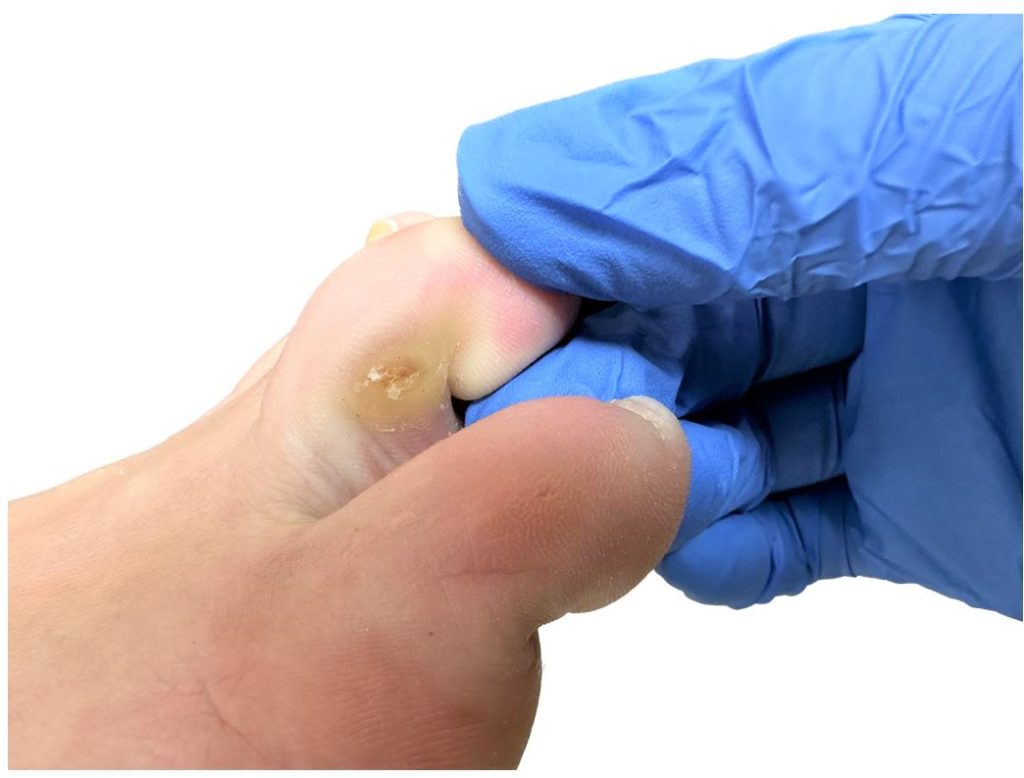
This type of foot corn is softer in texture and is often whitish or grey in appearance. It usually forms between the toes, where moisture keeps the skin rubbery, and it often develops when neighbouring toes rub against each other, especially in close fitting or narrow shoes.
Seed Corn
This is a tiny, round corn that usually forms on the bottom of the foot. It might appear on its own or as part of a small cluster. Although it’s often painless, it can still cause discomfort if it develops in an area that takes repeated pressure during walking or standing.
Vascular or Neurovascular Corns
This type of foot corn is more sensitive because it contains blood vessels and nerve endings. As a result, it can be quite painful and might bleed if cut. Because of this, it needs extra care and is best assessed and managed by a podiatrist.
Fibrous Corn
This type of foot corn is attached firmly to deeper tissue beneath the skin, making it harder to remove. In many cases, assessment and management by a podiatrist is recommended to address it safely and precisely.
Subungual Corn
This type of foot corn forms beneath the toenail, which can make it harder to detect and remove. Because of its location, assessment and management by a podiatrist is recommended, and this might involve a nail avulsion procedure.
Causes of Foot Corns
Foot corns usually form gradually under repeated friction or pressure rather than from one isolated cause. Over time, factors such as footwear, foot shape, daily activity, and underlying risk can work together to increase stress on one area of skin.
What Increases Friction or Pressure on the Foot?
- Poor fitting shoes, especially those that are tight, narrow, loose, or high heeled, can increase rubbing and pressure on certain parts of the foot.
- Shoes that let the foot slide or rub against seams and inner edges can keep irritating the same area over time.
- Going without socks, or wearing socks that don’t fit properly, can increase friction against the skin during daily activity.
- Standing, walking, sports, work, or other repeated activities can keep loading the same area of the foot over time.
Who Carries Higher Baseline Risk?
- Inherited foot shape and structure can make some people more prone to repeated rubbing or pressure in certain areas of the foot.
- Structural foot changes such as hammertoes, bunions, and bunionettes, can increase crowding, friction, or pressure across the foot.
- Certain walking patterns or foot mechanics can keep shifting load onto the same area, increasing repeated stress over time.
- People with diabetic neuropathy can have altered pressure distribution under the foot, causing certain spots to be under constant high pressure.
- Some people might also have an inherited tendency to develop certain types of foot corns.
Conditions Commonly Mistaken for Foot Corns
Not every hard or painful patch on the foot is a corn. Some conditions can look similar at first because they also cause local discomfort or skin changes in the same area. This is why it’s important to identify the exact cause, since management can differ depending on what is actually affecting the foot.
- Calluses – These also develop from repeated pressure and friction, causing the skin to thicken over time. However, they’re usually broader and less defined, while a foot corn tends to be smaller, more localised, and more likely to have a firm central core.
- Plantar warts – These can also be mistaken for foot corns, especially when they form on the sole and become painful during walking. Unlike foot corns, plantar warts are of a viral nature and might disrupt the natural skin lines or show small black dots.
Managing and Preventing Foot Corns
Foot corns can persist when the same area of skin is exposed to repeated friction or pressure on a daily basis. Because of this, management isn’t just about reducing the thickened skin itself, but also about addressing the factors that caused it to form in the first place. At the same time, the approach can vary depending on where the foot corn is located, how painful it is, and the type.
To start, the focus is on reducing irritation and limiting further pressure through the affected area while keeping daily activity more comfortable:
- Avoid cutting, picking, or digging at the corn yourself, as this can worsen irritation and damage the surrounding skin.
- Choose footwear that fits well, with enough room through the toe box to reduce crowding, friction, and pressure.
- Wear socks that fit properly and help reduce friction during walking, standing, and other daily activity.
- Use protective padding, bandages, toe separators, or custom orthotics where appropriate to reduce rubbing and repeated pressure.
When a foot corn remains painful, keeps returning, or is linked to an underlying pressure problem, podiatry care can help address it more directly:
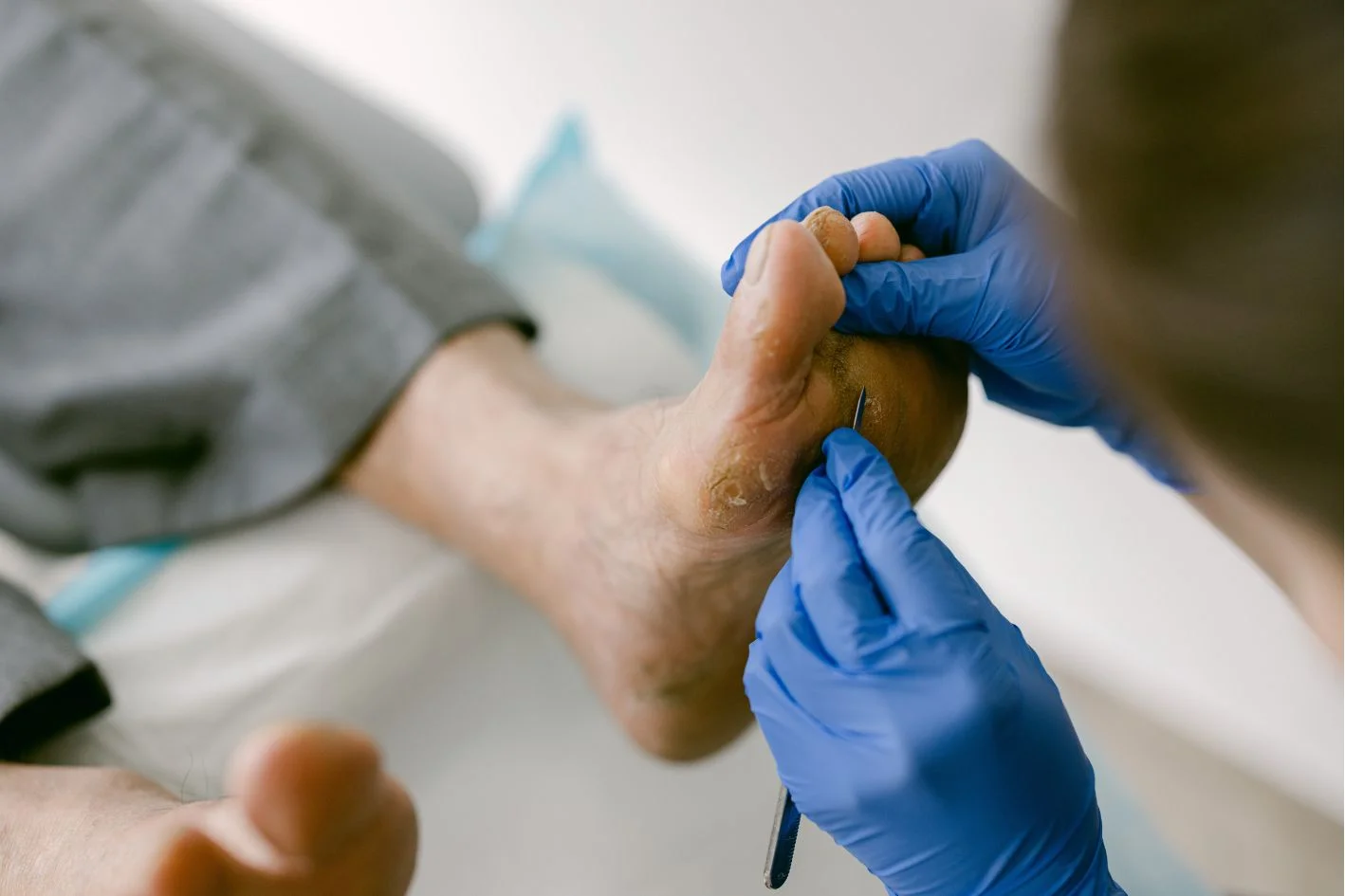
- Debridement can reduce thickened skin carefully, helping relieve pressure and improve comfort during walking and shoe wear.
- Footwear advice can help when shoe fit, toe crowding, or repeated rubbing is contributing to the problem.
- Pressure assessment can help identify whether foot shape or gait pattern is driving repeated stress through one area.
- Structural problems such as bunions or hammertoes might also need attention when they’re increasing pressure.
- Deeper or harder to access foot corns will require more targeted podiatrist care, such as a nail avulsion procedure for the subungual type.
If a foot corn remains painful and continues to affect walking comfort or footwear choice, assessment by a podiatrist can help clarify what’s placing repeated pressure on that area. This allows management to be directed not just at the foot corn itself, but also at the underlying factor contributing to it.
Have Your Foot Corn Removed at Straits Podiatry
When a foot corn becomes painful enough to affect walking comfort or make certain shoes harder to wear, more targeted care is often needed. At Straits Podiatry, we assess whether the problem is truly a foot corn, identify the type involved, and look closely at the pressure, friction, or structural factor that is keeping that area irritated.
Once that is established, we can then plan for the removal of it and management around what your foot actually needs. This might include careful debridement, footwear advice, padding or pressure relief measures, and more specific podiatry care for deeper or harder to access foot corns. Speak with our team or book a consultation for an assessment and a personalised plan for the removal of your foot corn.
Frequently Asked Questions About Foot Corns
What is a foot corn?
A foot corn is a small, localised area of thickened skin that develops when one part of the foot is exposed to repeated pressure or friction. It commonly forms on the toes, the ball of the foot, or other spots that take ongoing rubbing from footwear or weight bearing. Some foot corns are hard and dense, while others are softer and form between the toes where moisture is present. Even though they’re small, they can still cause discomfort when walking or standing.
What are the symptoms of foot corns?
Symptoms usually centre around one distinct pressure point rather than a broad area of skin. A foot corn often appears as a small patch of thickened skin with a firm central core, and it can feel tender when pressed. Pain might become more noticeable during walking, standing, or when shoes rub against the area. When that discomfort starts interfering with daily activity, assessment by a podiatrist can help confirm the cause and guide management.
Are foot corns the same as foot calluses?
Although both are linked to repeated pressure and friction, foot corns and foot calluses are different. Foot corns are usually smaller, more defined, and more likely to have a central core that presses into the underlying tissue, which is why they can be painful. Foot calluses, by comparison, tend to be broader and spread across larger weight bearing areas such as the sole. They’re often less painful, although they can still feel uncomfortable if they become thick.
Are foot corns contagious?
Although a foot corn might resemble some other skin conditions, it isn’t contagious. It develops from repeated friction or pressure, often linked to footwear, foot mechanics, or underlying foot structure, rather than from an infection. This is one of the key ways it differs from a plantar wart, which is caused by human papillomavirus (HPV).
Can I remove a foot corn myself?
If you are thinking about cutting out a foot corn yourself, it’s best not to. A podiatrist can remove the thickened skin safely using appropriate instruments, which helps reduce the risk of complications, while also assessing what’s causing repeated pressure in that area. This is important because dealing with the foot corn alone is inadequate if footwear choice, pressure pattern, or underlying foot structure contributing to it isn’t also addressed.
Share this with someone you know