
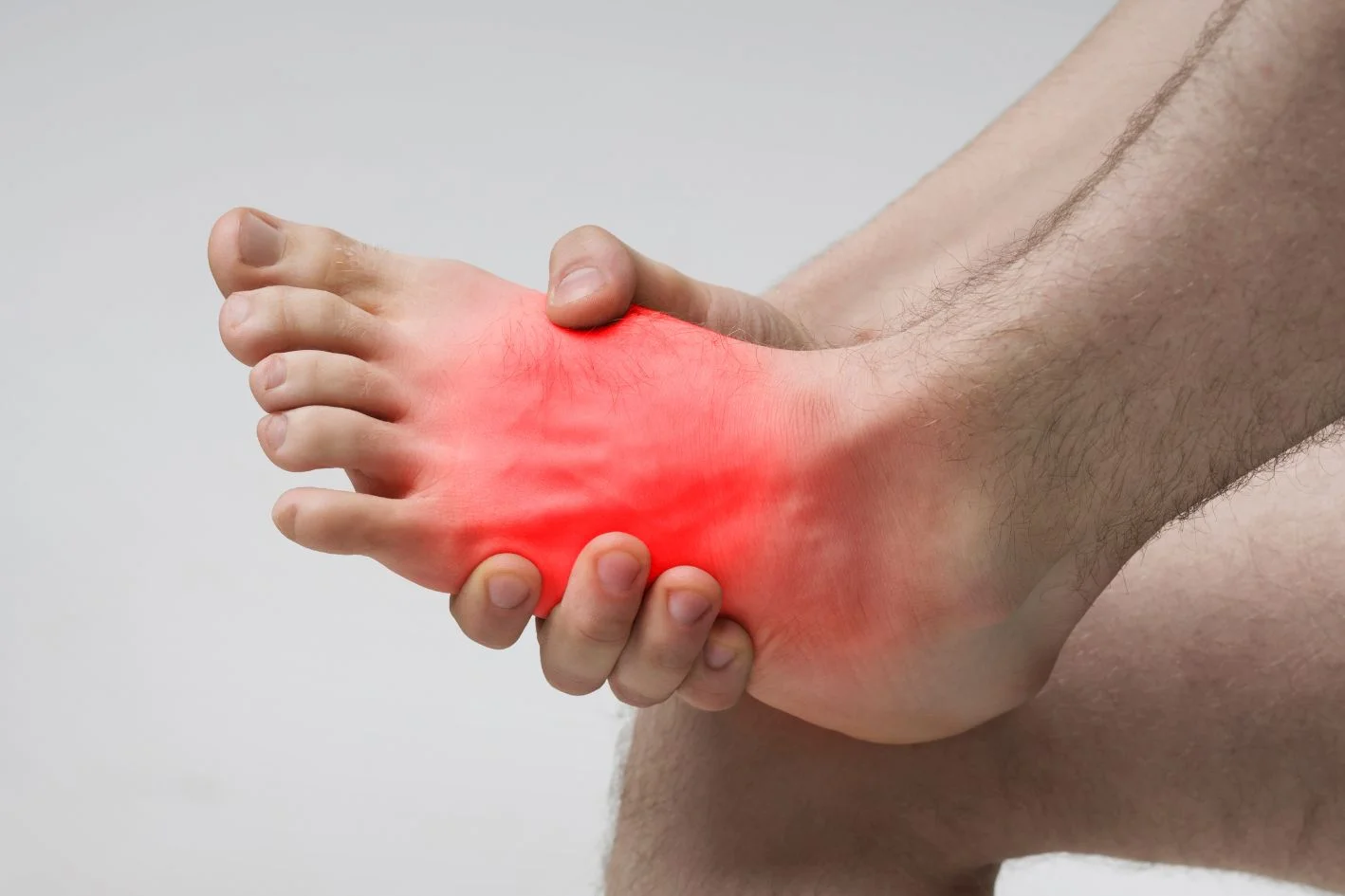
Dealing with an inexplicable pain on top of your foot? At first, it might only show up when walking, exercising, or spending longer periods on your feet, so it can be easy to mistake it for temporary soreness. However, when the discomfort keeps returning or becomes more noticeable with movement, it can start to suggest irritation affecting the tissues in that area.
One possible source is the extensor tendons, which run across this region of the foot and help lift the toes during movement. More specifically, this includes the extensor hallucis brevis and extensor hallucis longus, which extend the big toe, as well as the extensor digitorum brevis and extensor digitorum longus, which help lift the smaller toes. As a result, when these tendons become irritated, walking and other weightbearing activity can start to provoke pain more easily.
This is medically referred to as extensor tendonitis. In simpler terms, tendonitis means a tendon has become irritated or inflamed, often after repeated strain, overuse, or pressure through the area. Since pain affecting the top of the foot can point to more than one issue, it helps to first look at the symptoms of extensor tendonitis and how it tends to present.
Symptoms of Extensor Tendonitis
As mentioned earlier, pain affecting the top of the foot can point to more than one issue, and a foot fracture is one example of this. For this reason, it helps to understand how extensor tendonitis tends to present:
- Pain on Top of Foot – Pain is commonly felt across the top of the foot, often developing gradually and sometimes running along the affected tendon.
- Pain That Worsens with Activity – Walking, running, exercise, or longer periods on your feet can make the discomfort more noticeable.
- Swelling, Redness, or Warmth – The area on top of the foot might look swollen, appear red, or feel warmer than usual.
- Stiffness in the Affected Area – The top of the foot might feel stiff, particularly when moving the toes or using the foot after rest.
- Thickening or a Small Nodule – In some cases, the affected tendon might feel thickened, or a small lump can be felt along it.
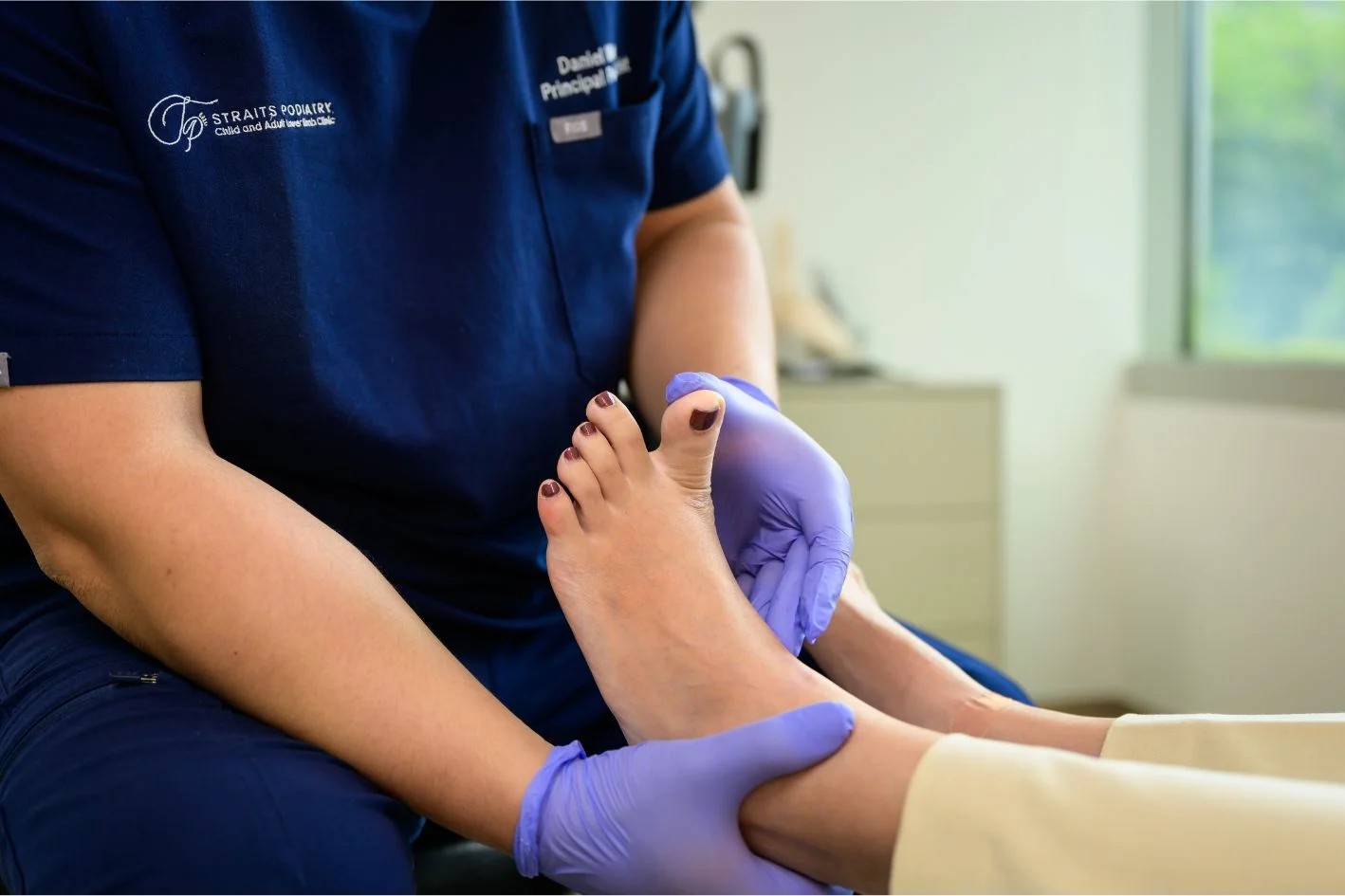
Need Help? See A Podiatrist Today
Causes of Extensor Tendonitis
Once the symptoms start becoming more noticeable, the next question is usually what has been irritating the extensor tendons in the first place. For some, the problem develops through repeated strain over time, while for others, footwear pressure, activity changes, or an injury might be contributing factors. It’s also worth looking at both the direct causes of irritation and the factors that can make someone more prone to developing it.
What Causes Extensor Tendonitis?
- Repetitive overuse, especially during long periods of standing, walking, or running, can place the extensor tendons under ongoing strain and lead to injuries over time.
- A sudden increase in activity can raise the workload on the extensor tendons faster than the foot is ready to handle.
- Footwear pressure, whether from shoes that are too tight or laces that are pulled too firmly, can irritate the tendons across the top of the foot.
- Training related factors such as poor technique, insufficient recovery, uphill exercise, or unstable surfaces can place extra demand on the area.
- Tissue stiffness, such as calf muscle tightness, can increase demand of the extensors to counterbalance the mobility restriction
- A sudden foot or ankle injury can also trigger extensor tendonitis rather than it developing only through overuse.
Who Carries a Higher Baseline Risk?
- Ageing is linked to a higher risk of tendon problems, which can make extensor tendon irritation more likely over time.
- Being overweight can increase the amount of load passing through the foot, which in turn can place more stress on the extensor tendons.
- People with flat feet (Pes planus) might be more prone because of how load is distributed through the foot, which can place more strain on the extensor tendons.
- People with high arches tend to greater ankle joint stiffness, leading to overuse of the extensor tendons to help lift up the foot during movement (extensor substitution).
- Conditions such as diabetes, rheumatoid arthritis (RA), and psoriatic arthritis can increase the likelihood of tendon related problems.
- Weakness or tightness in the muscles of the foot or leg can alter how load is handled, which can place more strain on the extensor tendons.
- A history of foot or ankle trauma or previous surgery might leave the area more vulnerable and make the tendons less tolerant of repeated strain.
- Smoking, prolonged use of oral corticosteroids, and fluoroquinolone antibiotics have also been linked to poorer tendon health.

Managing and Preventing Extensor Tendonitis
Managing extensor tendonitis usually starts with reducing irritation around the affected tendons and giving the area a chance to settle. In many cases, conservative care at home is enough to ease pain and inflammation, especially when the problem is picked up early and the aggravating activity is reduced.
Some common ways to manage extensor tendonitis include:
- Reducing or pausing the activities that keep aggravating the tendons, especially walking, exercise, or repeated loading through the foot.
- Using the RICE method at home with rest, ice, compression, and elevation to help manage pain and swelling.
- Taking anti-inflammatory medication such as non-steroidal anti-inflammatory drugs (NSAIDs) if advised, to help relieve pain and inflammation.
- Undergoing shockwave therapy to stimulate healing and repair of the inflamed tendons
- Going for physiotherapy to improve range of motion, restore strength, and help the irritated tendons settle.
- Following a care plan based on how irritated the extensor tendons are and how long the symptoms have been present.
To help reduce the risk of the problem returning, it’s also worth paying closer attention to the habits and factors that might keep overloading the tendons:
- Build up activity levels gradually rather than increasing intensity too quickly.
- Make room for proper recovery between workouts or repeated physical activity.
- Warm up properly before exercise, especially before walking, running, or higher impact activity.
- Avoid pushing through pain on top of the foot when symptoms start to return.
- Wear supportive footwear, and use custom orthotics where needed, to help reduce pressure and improve how load is managed through the foot.
- Avoid tying shoelaces too tightly, especially if they place added pressure across the top of the foot.
When pain on top of the foot keeps returning despite these measures, or starts becoming more noticeable with walking and daily activity, it’s worth having the problem assessed properly by a podiatrist. This helps confirm whether extensor tendonitis is the issue and rule out other causes, such as a metatarsal stress fracture.
Have Your Extensor Tendonitis Managed at Straits Podiatry
Pain on top of the foot is easy to ignore at first, especially when it seems to flare only during walking, exercise, or longer periods on your feet. However, once it starts to persist or feels more aggravated in certain shoes, it can become harder to manage on a daily basis. At Straits Podiatry, we will first assess whether your symptoms are consistent with extensor tendonitis, look at how the tendons are coping with load and movement, and identify the factors contributing to the problem.
Once we have a better understanding of what’s driving your symptoms, we can plan a care approach around your needs. This might include activity modification, footwear advice, support to reduce strain on the tendons, and targeted care to help bring the irritation down. Speak with our team or book a consultation for an assessment and a tailored approach to manage your extensor tendonitis.
Frequently Asked Questions About Extensor Tendonitis
What does extensor tendonitis in the foot feel like?
Extensor tendonitis usually causes pain on the top of the foot, especially during walking, running, or other activity that keeps loading the area. For some, the discomfort feels quite localised, while for others it seems to run along the affected tendon. The pain is often most noticeable around the area where the shoelaces sit, and there can also be swelling in the same region.
Can tight shoes cause extensor tendonitis?
Yes, they can. Shoes that are too tight can place added pressure across the top of the foot and irritate the extensor tendons underneath. In some cases, tightly tied shoelaces can add to that pressure as well. Footwear isn’t always the only reason extensor tendonitis develops, but it can contribute to the problem and make the pain more noticeable.
Is it okay to walk with extensor tendonitis?
Not always. Some people can still walk with extensor tendonitis, but that depends on how irritated the tendon is. In more severe cases, walking can become very painful and difficult. If weightbearing is clearly aggravating the area, or the pain keeps returning, it’s usually a sign that the extensor tendons aren’t settling and that the problem should be assessed properly.
How long does extensor tendonitis take to settle?
For some, extensor tendonitis settles within a few weeks, while for others it can take a few months. Much depends on how irritated the tendons are, how much strain is still going through the foot, and whether the problem is being managed properly. If the area keeps getting aggravated, the symptoms can linger and take longer to settle.
Does extensor tendonitis always need surgery?
No, not always. Extensor tendonitis is often managed without surgery, especially when it’s identified early and the tendons are given a chance to settle. Care by a podiatrist might include load modification, footwear advice, physiotherapy, and other conservative measures. Surgery is usually only considered when symptoms persist, structural damage is suspected, or the problem doesn’t improve with non-surgical management methods.
Share this with someone you know