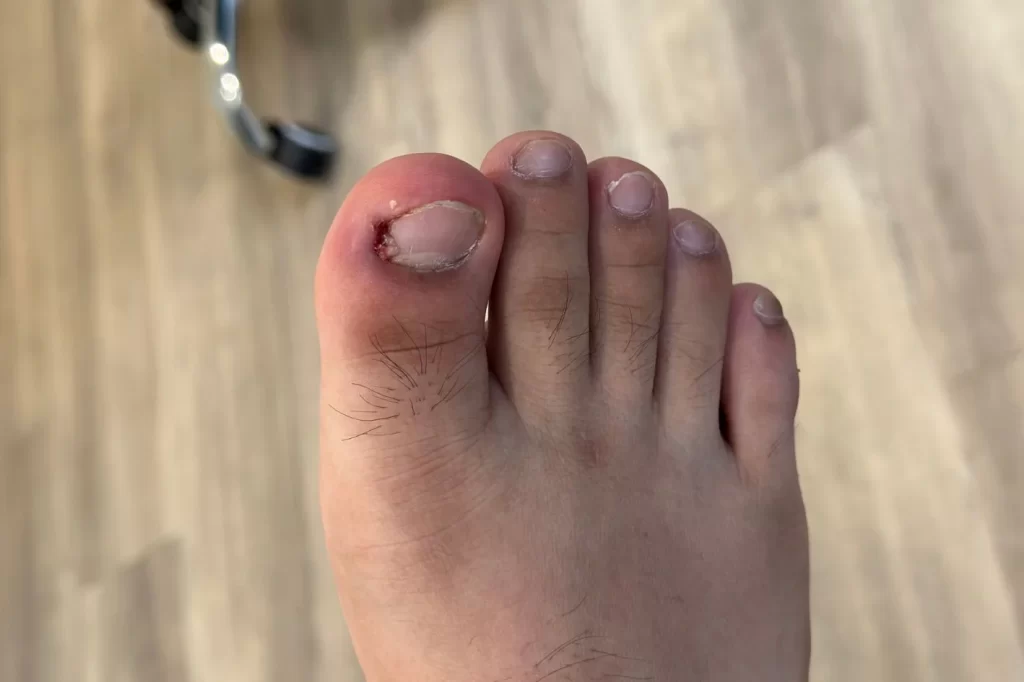
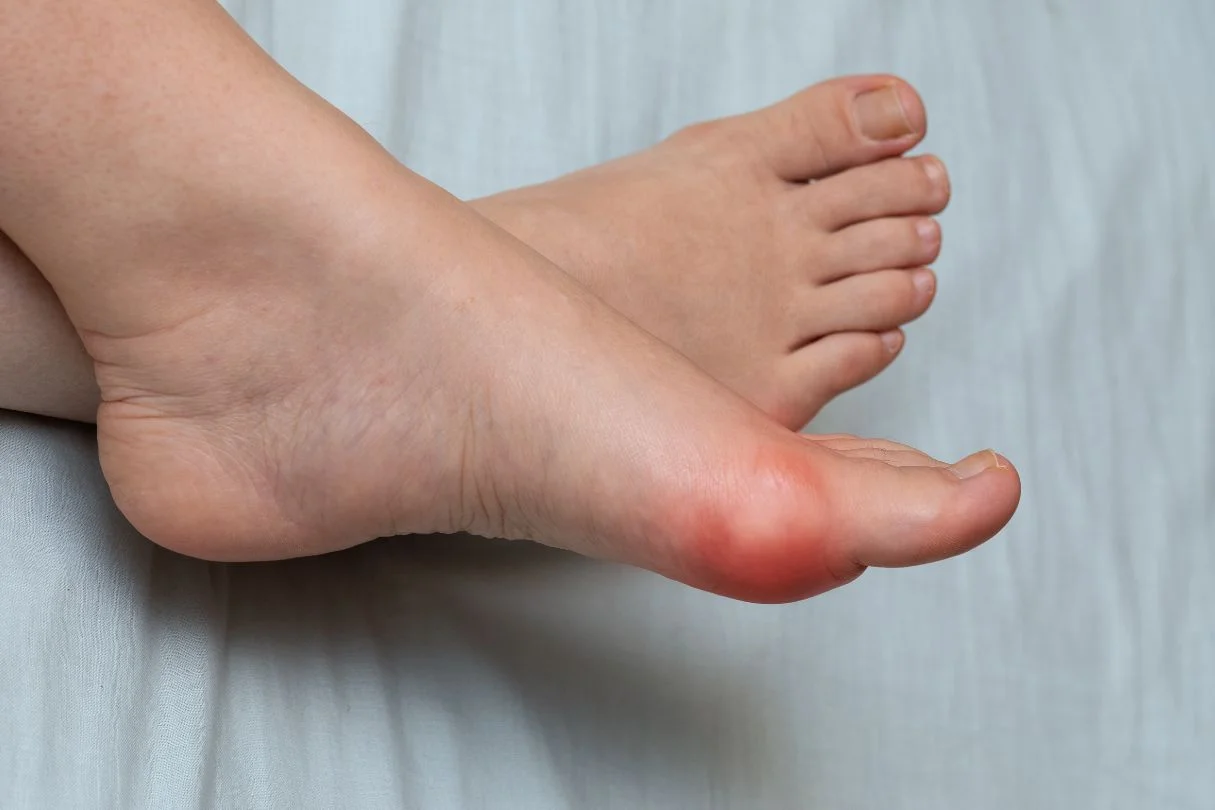
It often begins with uncertainty. Your big toe is swollen, red, and uncomfortably tender, yet you can’t tell whether this is something inflammatory, structural, or simply the result of overuse. The pain might have arrived overnight and jolted you awake. Or it might have built gradually over a period of time until your usual shoes started pressing against the joint and walking no longer felt natural. Either way, the base of the big toe has suddenly become impossible to ignore.
What complicates things, especially for those who search online for terms such as “big toe pain”, is that several very different conditions can present in this exact same location. Three are most commonly responsible: bunions, gout, and sesamoiditis. Although the redness, swelling, and tenderness might look alike on the surface, one stems from structural joint change, another from a metabolic trigger, and the third from mechanical overload beneath the toe. Understanding how each one presents through its symptoms is the key to identifying what your big toe is actually dealing with.
The Difference Between Bunion Pain, Gout, and Sesamoiditis
Because these three conditions can look similar at first glance, the real difference lies in the pattern of symptoms. The way the pain starts, the intensity of the swelling, and what makes it worse are more reliable indicators than appearance alone. Recognising these patterns helps you narrow down which condition is more likely responsible.
Bunion
A bunion reflects progressive structural change at the first metatarsophalangeal (MTP) joint.
- A visible bump forms along the inner side of the big toe joint.
- The big toe gradually shifts toward the second toe over time.
- Pain is often linked to shoe pressure, friction, or prolonged standing.
- Discomfort tends to be mechanical and persistent rather than sudden.
- Stiffness in the joint may develop as alignment changes advance.
Gout
Gout typically presents as an acute inflammatory flare that feels disproportionate to any recent activity.
- Pain often begins suddenly, frequently overnight or in the early morning.
- The joint appears visibly swollen, red, and warm to touch.
- Tenderness can be extreme, sometimes making even light contact painful.
- Walking becomes difficult during a flare due to intense joint sensitivity.
- Episodes might take several days to settle and can recur if the underlying metabolic trigger remains.
Sesamoiditis
Sesamoiditis develops from repetitive mechanical stress beneath the big toe, particularly during push off.
- Pain is localised to the underside of the big toe rather than along the side.
- Discomfort builds gradually with running, jumping, or prolonged walking.
- Pressing directly under the joint reproduces the pain.
- Symptoms often worsen in thin soled or high heeled footwear.
- Swelling might be subtle compared to gout, but weight bearing aggravates the discomfort.
Once the symptom pattern becomes clearer, the next step is to understand why it developed in the first place.

Need Help? See A Podiatrist Today
Triggers and Origins: Why There's Pain in Your Toe
Earlier, we established that one condition stems from structural joint change, another from a metabolic trigger, and the third from mechanical overload. This distinction matters because the reason your toe is painful often reflects what has been happening in your body or daily routine long before the swelling became obvious.
- Progressive structural change: A bunion forms as the big toe joint gradually shifts out of alignment, altering how pressure is distributed across the forefoot. Genetics, foot biomechanics, and chronic shoe pressure can influence this progression. In this case, the pain arises from joint misalignment rather than an acute inflammatory trigger.
- Metabolic imbalance: Gout develops when elevated uric acid levels in the blood lead to the formation of monosodium urate crystals within the joint, triggering inflammation. Diets high in purine, alcohol intake, dehydration, and certain metabolic conditions increase the likelihood of crystal formation. Here, the pain reflects a biochemical process rather than a structural issue in the toe.
- Repetitive mechanical strain: Sesamoiditis occurs when the sesamoid bones beneath the big toe are repeatedly overloaded during push off. Running, jumping, sudden increases in activity, or prolonged standing in thin soled footwear can irritate the surrounding tissue. The discomfort builds because the mechanical stress exceeds the tissue’s ability to recover.
The Risk of Misdiagnosis and Choosing the Right Next Step
It might be tempting to wait and see if the pain settles on its own, especially if it improves slightly with rest. However, persistent big toe pain rarely resolves by assumption alone. Treating a structural bunion as though it were gout, or dismissing a metabolic flare as simple footwear irritation, can delay meaningful improvement and allow the underlying issue to progress.
Over time, ongoing pain at the base of the big toe can subtly change how you walk. Even small adjustments in weight bearing might increase stress across the forefoot or ankle while the primary condition remains unaddressed. When symptoms are recurring, intensifying, or limiting your daily movement, clarity becomes more important than trial and error. A focused assessment helps confirm what’s causing the pain and prevents short term fixes from turning into longer term problems.
Confirm the Cause of Your Big Toe Pain at Straits Podiatry
If the pain in your big toe keeps recurring, never fully settles, or worsens over time, it often means the root cause hasn’t been clearly identified. Swelling and tenderness might look similar on the surface, yet bunions, gout, and sesamoiditis require very different approaches. Footwear adjustments that ease bunion pressure will not control uric acid driven inflammation, and dietary changes will not correct structural joint deviation. When the method doesn’t match the problem, symptoms persist and the condition continues to progress.
For that reason, establishing the correct diagnosis is essential. At Straits Podiatry, the assessment focuses on how your toe joint is aligned, how pressure is distributed across your forefoot, and how your symptoms developed over time. This approach ensures that recommendations for care are based on what’s actually driving the pain rather than just the visible swelling. Book an appointment today for a professional evaluation and get clear answers about your big toe’s discomfort.